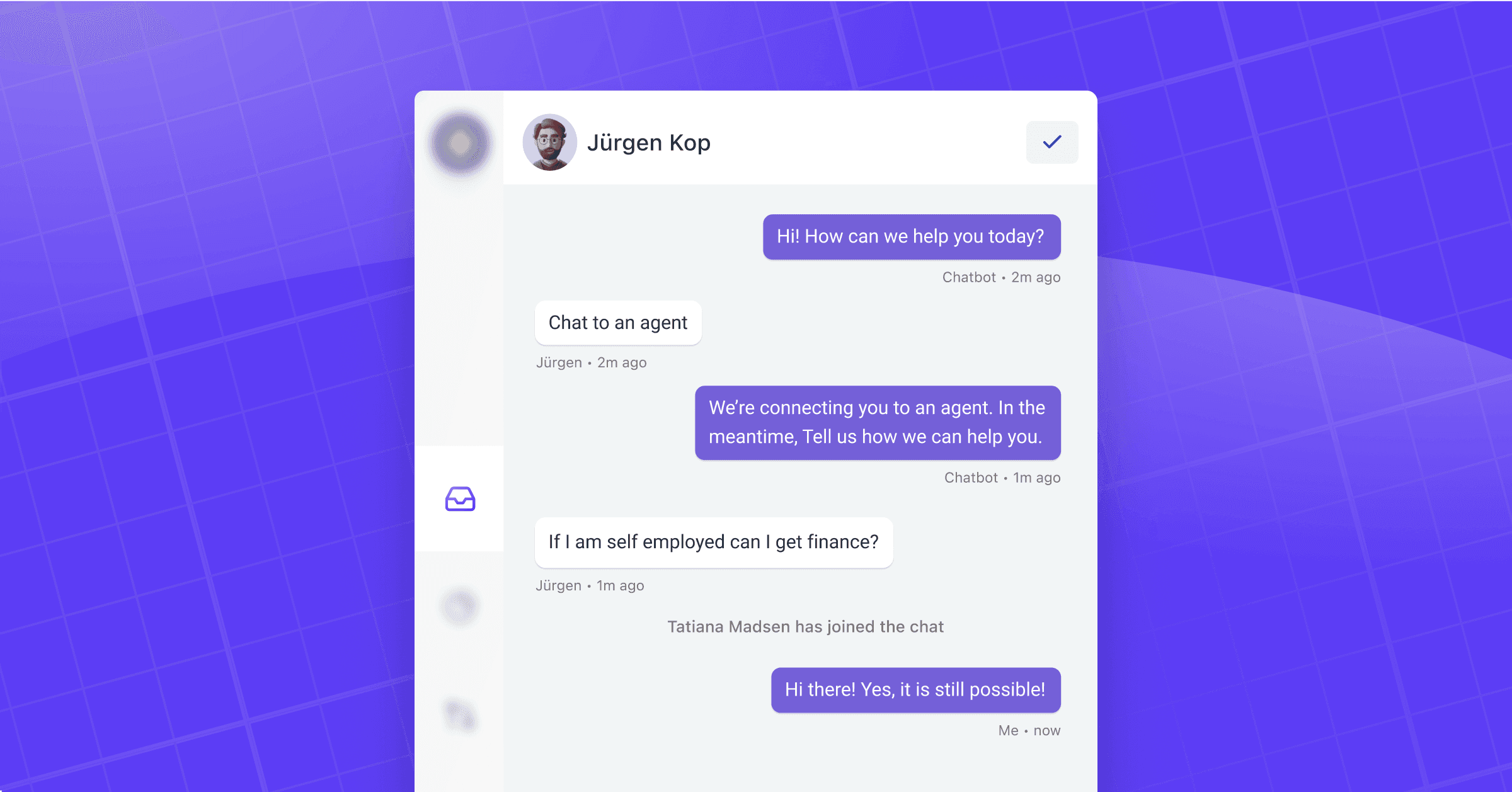
The Cue web widget is a chat button on your website that lets visitors message you on web chat, WhatsApp or Facebook Messenger without leaving the page. You can use it to answer FAQs automatically, book appointments, share order updates, collect feedback and pass visitors to a person when they need one. Every conversation lands in the same Cue inbox as your other channels.
Below are ten ways businesses use it, with examples from automotive, insurance, retail and travel.
What is the Cue web widget?
The Cue web widget sits on every page of your website. It gives customers a quick way to get answers and help, and lets you follow up through Facebook Messenger, WhatsApp, web chat, email or a phone call.
Instead of hunting for a phone number or filling in a contact form, visitors start a conversation straight away. A chatbot or AI Agent can answer the first question, and your team can take over in Live Chat whenever it's needed. You add the widget to your site with a short snippet of code.
Quick recap: what are channels?
A channel is the route a customer uses to reach you: WhatsApp, Facebook Messenger, web chat, email or phone. Before you set up the widget, you connect the channels you want it to offer. In Cue, all of them arrive in one inbox, on one contact record.
That matters for follow-up. A visitor might start on web chat, carry on over WhatsApp later that day, and then speak to your team on the phone. In Cue, your team can call a customer from the conversation, and the call, its recording and transcript sit on the same record as the chat. See how calls work in Cue.
10 ways to use the Cue web widget
1. Answer FAQs instantly
Your team is probably answering the same questions every day. Set up a chatbot or an AI Agent to handle them: opening hours, product details, delivery times, how to book.
Customers get an answer immediately, and your team has more time for questions that need a person.
Example: car dealerships. A visitor wants to know when your service department opens on Saturday. The chatbot answers in seconds, and can offer to book them in.
2. Hand over to a person
Automation handles the simple questions, but sometimes customers want to talk to someone. From the widget, they can move from a chatbot to a live conversation with your team on web chat, WhatsApp or Messenger, without starting again.
Example: insurance. A customer comparing policies has a specific question about cover. The chatbot collects their details and passes them to an agent who can answer properly.
3. Book appointments
Booking by phone means waiting for someone to pick up. Through the widget, customers can request or book an appointment in a chat, using a Flow that asks the right questions.
Example: test drives. A visitor on a model page asks to book a test drive. The widget captures the car, the preferred time and their contact details, and your sales team confirms.
4. Collect feedback
Feedback is easiest to get straight after the conversation, while the experience is fresh. Send a short survey in the same chat once an enquiry is resolved.
Example: service follow-up. After a customer completes a service request through your website, they receive a two-question survey in the chat. Your team sees the scores alongside the conversation.
5. Share order updates
"Where's my order?" is one of the most common questions online retailers get. With your order system connected, the widget can send customers a tracking link or status update when they ask, without an agent stepping in.
Example: ecommerce. A customer enters their order number in the chat and gets their tracking link straight away.
6. Offer promotions at the right moment
A visitor with a question on a product page is already interested. The widget lets you greet them with a relevant offer while they're browsing.
Example: retail. Someone opens the widget on a product page and is greeted with a limited-time discount for first orders.
7. Share helpful content
Customers appreciate quick access to the right information. Use automated replies to share brochures, guides, price lists or how-to articles when people ask.
Example: brochures. A retailer sends a link to the latest catalogue automatically when a visitor asks what's new this season.
8. Handle returns and exchanges
Returns are a hassle for customers and a drain on support time. A Flow in the widget can take the customer through your returns process, collect the details and log the request, without them needing to email your support team.
Example: online stores. A customer who needs to return an item starts the process in the chat and gets the next steps straight away.
9. Provide support around the clock
Customers ask questions at all hours. A chatbot or AI Agent can answer common queries outside business hours, and anything it can't handle waits in the inbox for your team in the morning.
Example: serviced accommodation. Late in the evening, a visitor asks about room options in another city. The AI answers, helps them start a booking and tells them when the team will be back for anything else.
10. Recommend products and services
Flows and chatbots can ask a few simple questions and recommend the right product, package or service based on the answers.
Example: travel agencies. A visitor planning a holiday answers questions about destination, dates and budget in the chat, and gets suggestions to discuss with an agent.
Getting more from the widget
Start with three or four uses, not all ten. FAQs, handover and one revenue use (bookings or recommendations) is a good first set.
Write your FAQ answers carefully. Chatbots and AI Agents are only as good as the information you give them.
Decide who picks up handovers, and during which hours.
Review conversations weekly to find new questions worth automating.
For more on turning website visitors into customers, see our guide to Cue web chat.
See the widget on your own site
Book a demo and we'll show you how the widget, your channels and your team work together in Cue.