
Last updated
Cue
Customer service
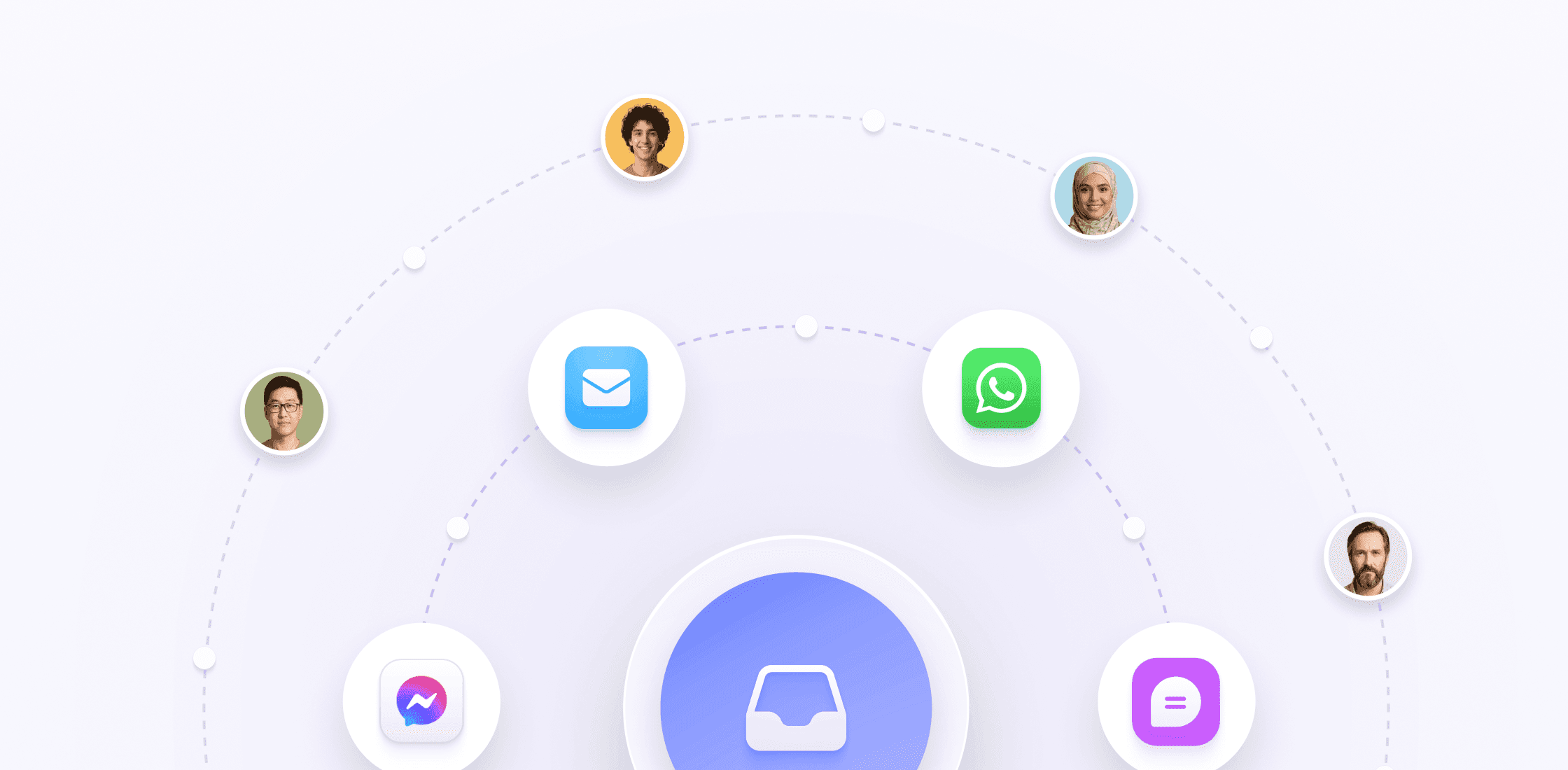
Every customer service leader has heard the word "omnichannel" more times than they can count. It has become the default aspiration for any support organisation with more than one communication channel. Yet for most teams, the reality looks nothing like the promise. Customers still repeat themselves when they switch from one channel to another. Agents still toggle between disconnected tools. And leadership still struggles to get a single, coherent view of the customer experience.
The problem is not a lack of channels. Most businesses already offer several. The problem is that adding channels without unifying them creates a multichannel experience dressed up as omnichannel. In 2026, with customer expectations higher than ever and AI reshaping what is possible, it is time to revisit what a genuinely omnichannel support strategy looks like, and what it actually takes to get there.
Key Takeaways
Omnichannel is not about being everywhere. It is about delivering a seamless, context-rich experience across the channels your customers actually use.
Customer expectations have shifted from "be available" to "know who I am and what I need, regardless of how I contact you."
Fewer channels done well will always outperform more channels done poorly. Prioritise depth of integration over breadth of presence.
AI is most powerful when it works across every channel, providing suggested replies, conversation summaries, and intelligent routing, not just powering a standalone chatbot.
What Do Customers Actually Expect in 2026?
Customer expectations around support have not just risen; they have fundamentally changed shape. A decade ago, being available on live chat felt innovative. Today, customers assume they can reach a business on WhatsApp, email, voice, web chat, SMS and more, and they expect the experience to be consistent across all of them.
But availability is now table stakes. The real expectation is continuity. When a customer starts a conversation on WhatsApp and follows up by email two days later, they expect the agent to have full context: what was discussed, what was promised, and where things stand. Research consistently shows that having to repeat information is the single biggest frustration in customer service. According to a widely cited Salesforce study, 76% of customers expect consistent interactions across departments, and 54% say it often feels like sales, service, and marketing teams do not share information.
This expectation gap is widening for a simple reason: consumers experience seamless, personalised interactions with the likes of Amazon, Spotify, and Uber every day. Those experiences set the benchmark, even for businesses operating in completely different industries. The bar is not set by your competitors; it is set by the best experience your customer has had with any brand.
The Channel Strategy Debate: Everywhere or Strategic?
There is a persistent assumption in customer service that more channels equals better service. On the surface, it makes sense: meet customers wherever they are. In practice, it often leads to a diluted experience spread too thin across too many touchpoints.
The smarter question is not "which channels should we add?" but "which channels can we serve excellently?" A business that delivers fast, context-aware support across WhatsApp, email, and voice will consistently outperform one that offers six channels but cannot maintain conversation continuity between any of them.
The right channel mix depends on three factors: where your customers already are (not where you assume they are), what types of queries dominate your queue, and your team's capacity to maintain quality across each channel. The table below offers a practical framework for evaluating each channel's role.
Channel | Best For | Customer Expectation | Response Window | Complexity Suited |
|---|---|---|---|---|
Quick queries, order updates, conversational support | Reply within minutes | Under 5 minutes | Low to medium | |
Detailed enquiries, documentation, follow-ups | Reply within hours | 1 to 24 hours | Medium to high | |
Voice | Urgent issues, complex complaints, empathy-driven interactions | Immediate connection | Immediate | High |
SMS | Notifications, appointment reminders, short confirmations | Read quickly, low reply expectation | Minutes to hours | Low |
Web Chat | Real-time help during browsing, pre-sale questions | Instant response | Under 1 minute | Low to medium |
The key insight here is that each channel serves a distinct purpose. WhatsApp is not a replacement for email, and web chat is not a substitute for voice. The goal of an omnichannel strategy is not to homogenise these channels but to connect them, so that a conversation started in one can continue seamlessly in another, with full context preserved.
Platforms like Cue approach this by unifying WhatsApp, email, and web chat into a single workspace, giving agents one view regardless of which channel the customer chose. This matters because the channel decision should belong to the customer, not dictate the agent's workflow.
What Does a Truly Unified Omnichannel Experience Look Like?
If omnichannel is the goal, unification is the mechanism. A unified omnichannel experience has three defining characteristics.
First, a single customer view. Every interaction, regardless of channel, feeds into one profile. When an agent opens a conversation, they see the full history: previous tickets, purchase data from the CRM, and any notes from prior interactions. This is not just a nice-to-have; it is what separates omnichannel from multichannel. Without it, you have parallel channels, not connected ones.
Second, context that travels. If a customer messages on WhatsApp at 9am and calls at 2pm, the agent handling the call should see the WhatsApp conversation without the customer having to explain the situation again. This requires more than just storing messages; it requires a platform that treats all channels as one continuous thread. Cue's unified inbox, for example, brings conversations from every channel into a single timeline per contact.
Third, intelligent routing. Not all queries are equal, and not all agents are best suited to every type of request. A unified platform should route conversations based on content, urgency, customer value, and agent expertise, not just which channel the message arrived on. Workflow automation makes this possible at scale, ensuring that a VIP customer's billing query goes straight to a senior agent, while a routine FAQ gets handled by an AI agent or directed to a self-service resource.
How Is AI Changing Omnichannel Support?
The conversation around AI in customer service has matured considerably. In 2024, the dominant narrative was chatbots. In 2026, the most impactful applications of AI in support are far less visible to the customer, and far more valuable to the operation.
AI-powered suggested replies help agents respond faster without sacrificing personalisation. Rather than starting from scratch, agents receive contextually relevant response suggestions that they can accept, edit, or reject. This is particularly effective in high-volume environments where speed matters but templated responses feel impersonal.
Conversation summaries are another high-impact application. When an agent picks up a conversation that started with a different team member, or on a different channel, an AI-generated summary gives them instant context. This eliminates the "let me read through the entire thread" delay and dramatically reduces the time to resolution.
Intelligent routing powered by AI goes beyond simple keyword matching. Modern AI routing analyses the content and sentiment of incoming messages to determine the best destination: a specific team, a particular agent, or an AI agent that can resolve the query without human involvement. This is where the real efficiency gains live.
AI Agents represent the next evolution. Unlike traditional chatbots that follow rigid decision trees, AI agents can handle nuanced customer queries, pull information from connected systems, and escalate intelligently when they reach the limits of what they can resolve. The critical differentiator is that these AI agents work across all channels, not just web chat. A customer messaging on WhatsApp gets the same AI capability as someone on the website.
What matters most is that AI in omnichannel support is not a standalone feature. It is a layer that enhances every channel simultaneously. Platforms that treat AI as a cross-channel capability, rather than a chatbot bolted onto one touchpoint, deliver significantly better outcomes for both customers and agents.
A Four-Step Framework for Getting Omnichannel Right
For CS leaders looking to build or refine their omnichannel strategy, the following framework offers a practical starting point.
Audit your current channels. Map every channel you currently offer against actual usage data. Which channels do customers prefer? Where are resolution rates highest? Where are customers dropping off? You may discover that a channel you invested heavily in is barely used, while a neglected one is where your most valuable customers spend their time.
Unify your data. The foundation of omnichannel is a single source of truth for customer data. This means connecting your communication platform to your CRM, ensuring that contact profiles, conversation histories, and deal information flow in both directions. Without this, agents are making decisions with incomplete information.
Layer in automation and AI. Once your channels are connected and your data is unified, automation becomes powerful rather than chaotic. Build workflows that route conversations intelligently, trigger follow-ups automatically, and deploy AI agents to handle first-touch queries. Start with high-volume, low-complexity interactions and expand from there.
Measure what matters. Move beyond vanity metrics. Track first-contact resolution rate across channels, customer effort score, cross-channel conversation continuity (how often do customers repeat themselves?), and time to resolution by channel. These metrics tell you whether your omnichannel strategy is working for customers, not just whether the technology is switched on.
Frequently Asked Questions
What is the difference between omnichannel and multichannel customer service?
Multichannel means offering support across several channels (email, phone, chat) that operate independently. Omnichannel connects those channels into a unified experience where conversation history, customer data, and context flow seamlessly between them. The customer does not have to repeat themselves when switching channels.
Which channels should a business prioritise for omnichannel support?
Prioritise the channels your customers already use most, combined with those that best fit your query types. For most businesses, a core of WhatsApp (or messaging), email, and voice covers the majority of use cases. Add web chat and SMS based on specific needs rather than trying to be everywhere at once.
How does AI improve omnichannel customer service?
AI enhances omnichannel support by providing agents with suggested replies, generating conversation summaries for faster context, routing messages intelligently based on content and sentiment, and deploying AI agents that can resolve queries across all channels without human intervention.
Do I need to replace my existing tools to go omnichannel?
Not necessarily. Many omnichannel platforms integrate with existing CRMs and business tools (HubSpot, Salesforce, Shopify, Zendesk) so you can unify your channels without discarding your current stack. The key is choosing a platform that connects to what you already use rather than forcing a complete overhaul.
How do I measure the success of an omnichannel strategy?
Focus on metrics that reflect the customer experience: first-contact resolution rate, customer effort score, cross-channel continuity (whether customers have to repeat information), and time to resolution. These show whether your omnichannel approach is genuinely improving the experience, not just adding channels.
Ready to Unify Your Customer Conversations?
Building a genuine omnichannel support operation is not about adding more channels. It is about connecting the ones that matter, giving your team a single view of every customer, and using AI to make the whole system smarter. If your team is still toggling between tools and your customers are still repeating themselves, there is a better way. See how Cue brings WhatsApp, email, voice, SMS, and web chat into one workspace, with AI and automation built in.
