
Last updated
Grace Cowan
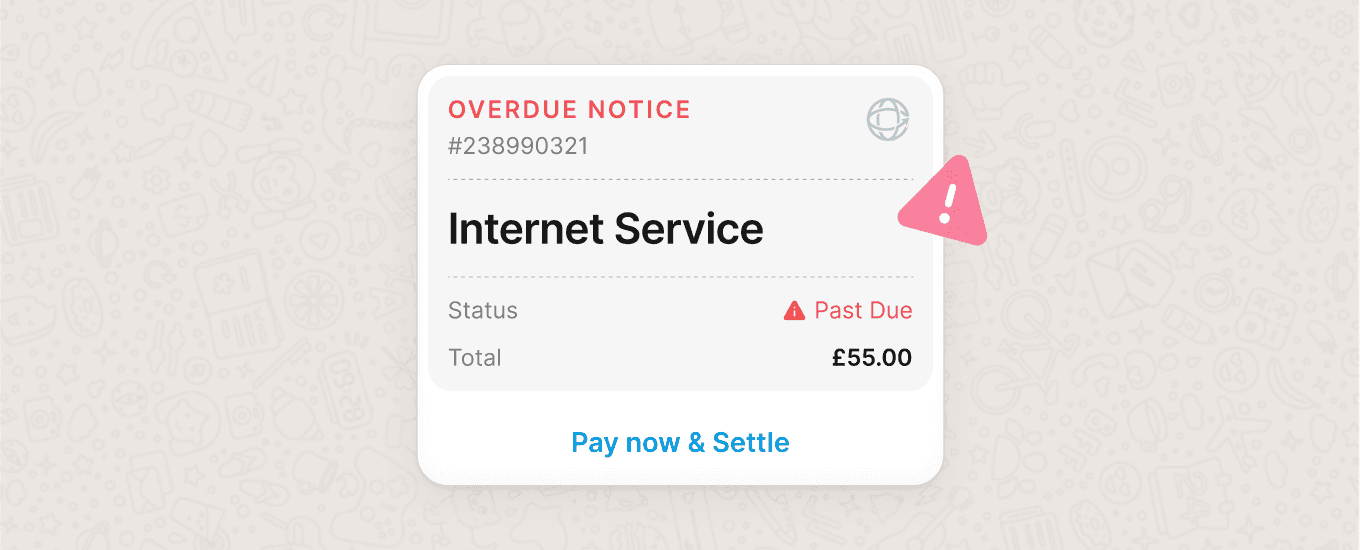

98% of WhatsApp messages get opened, compared to roughly 20% for email. If you are chasing overdue accounts by email, that gap is the whole story. You are sending reminders into a channel most customers barely check, then wondering why the balances keep sliding.
Yes, you can use WhatsApp to chase late payments, and for many businesses it is now the single most effective way to do it. WhatsApp lands your reminder where customers already spend their attention, and around 80% of messages are read within five minutes. Email reminders can sit unread for days. This article covers why payment chasing fails on email, why WhatsApp works, what a good reminder sequence looks like, and what you need to set it up compliantly.
Key Takeaways
Open rates decide everything. WhatsApp sits near 98% opens versus about 20% for email, so your reminder actually gets seen.
Timing beats effort. Automated reminders before, on, and after the due date cut overdue balances without manual chasing.
Two-way matters. Customers can reply to ask a question or request an extension, so conversations do not go cold.
Opt-in is the rule. Under South Africa's POPIA and the UK's PECR, you message contacts who have consented. That is a feature, because they are already engaged.
Why payment reminders fail on email
Payment reminders fail on email because most of them are never opened. Transactional and reminder emails typically see open rates of around 20 to 30%, and that is before spam filters, promotions tabs, and full inboxes take their cut. A reminder that is not opened does not exist as far as your cash flow is concerned.
There is a second problem: friction. A phone call feels confrontational, so customers avoid answering. Email feels ignorable, so customers ignore it. Both channels let an overdue account drift quietly. You end up spending staff time on manual follow-ups that generate very little movement.
SMS is a real improvement on email, and plenty of South African and UK businesses use it. But SMS is one-directional, character-limited, and increasingly associated with spam. WhatsApp still wins on open rate, and it lets the customer reply in the same thread.
Why WhatsApp works for collections
WhatsApp works for collections because it combines the highest open rate of any messaging channel with two-way conversation. The reminder gets seen, and if the customer has a query, they can answer it on the spot rather than the reminder disappearing into silence.
The channel psychology is the real edge. Three things stack up in your favour:
It gets read fast. With roughly 80% of WhatsApp messages read within five minutes, a due-date reminder reaches the customer while they can still act on it, not three days later.
It removes the awkward phone call. Customers who dodge collection calls will happily read and reply to a WhatsApp message, because it feels lower-pressure and is on their terms.
It keeps the thread alive. A customer who needs a payment extension can just ask. The conversation stays open instead of going cold, which is where most email reminders die.
A practical example: a South African internet service provider can send an automated reminder three days before a debit order runs, giving the customer time to top up their account and avoid a failed collection. If the customer replies to say money is tight this month, an agent picks up the same thread and arranges a part-payment, keeping the account active instead of pushing it into suspension.
What a WhatsApp collections sequence looks like
A WhatsApp collections sequence is a set of timed, automated reminders sent before, on, and after the due date, with a clear escalation path if the balance stays unpaid. The goal is to prompt payment early and often, without a person having to remember to chase.
Here is a sequence that works for most recurring-billing businesses:
Three days before due. A friendly heads-up with the amount and due date. This alone recovers accounts that were simply forgotten.
On the due date. A short confirmation-style reminder with a payment link or reference. Clear, neutral, easy to act on.
Three days after due. A firmer nudge noting the account is now overdue, with an invitation to reply if there is a problem.
Escalation. If there is still no payment or response, route the conversation to a human agent for a personal follow-up or a payment-arrangement offer.
The tone should stay respectful throughout. You are trying to get paid and keep the customer, not win an argument. In order to build these types of flows a WhatsApp Business Solution provider is used such as Cue. Cue's Flows let you build this exact sequence visually, with each step triggered by the due date and the payment status, so reminders fire automatically and only escalate to a person when they need to.
WhatsApp vs email vs SMS for chasing payments
WhatsApp leads on open rate and is the only one of the three that supports natural two-way replies. Email is cheapest but least seen. SMS sits in the middle. The table below compares the three channels on the metrics that matter for collections.
Channel | Typical open rate | Two-way replies | Best used for |
|---|---|---|---|
~98% | Yes, in-thread | Primary reminders and payment queries | |
SMS | ~90% | Limited | Backup channel and non-WhatsApp contacts |
~20% | Slow, separate thread | Formal statements and invoices | |
Phone call | Varies, often ignored | Yes, but intrusive | Late-stage, high-value accounts |
Open-rate figures are drawn from widely reported industry benchmarks and are indicative rather than guaranteed for any single business. Verified as of July 2026.
Which industries get the most out of WhatsApp collections
Recurring-billing and account-based businesses see the strongest results, because they chase the same customers on a predictable cycle. If you invoice monthly, run debit orders, or sell on account, WhatsApp reminders map neatly onto your billing calendar.
The use cases show up most clearly in a handful of sectors:
Utilities and telecoms. A utility provider can send billing notifications, prepaid token top-up prompts, and overdue-account reminders on WhatsApp, reaching customers in the channel they check daily.
Internet service providers. An ISP can automate debit-order reminders and account follow-ups, then let customers reply to sort out failed payments before the line is suspended.
Financial services and pay-later. A consumer finance or buy-now-pay-later business can send installment reminders and recover missed repayments while keeping the customer relationship intact.
Retail credit and B2B services. A retailer with store accounts, or a B2B supplier invoicing on 30-day terms, can nudge overdue balances without tying up an accounts team on the phone.
Property. A letting agent or property manager can send rent-due reminders and follow up on arrears in a channel tenants actually read.
What you need to set up WhatsApp payment reminders
You need three things: access to the WhatsApp Business API, pre-approved message templates, and an opted-in contact list. The consumer WhatsApp Business App is not enough for automated, at-scale reminders, which is why serious collections run on the API.
WhatsApp Business API access. This is what lets you send automated, templated messages to many contacts and connect WhatsApp to your billing or CRM system. You access it through an official provider rather than signing up directly.
Approved message templates. Any message you send outside a 24-hour customer-initiated window must use a template that WhatsApp has approved. Payment reminders fall squarely into this category, so your templates need to be set up and approved in advance.
An opted-in contact list. You can only message customers who have consented to hear from you. Capture that opt-in at sign-up or billing setup, and keep a record of it.
Cue is an Official WhatsApp Business Solution Provider, so it handles API access, template approval, and the opted-in contact management in one place. Cue's Templates feature stores your approved reminder messages, Cue's Flows automate the send timing, and Cue's unified inbox catches every reply so an agent can step in when a customer needs to talk.
Is it legal to send payment reminders on WhatsApp?
Yes, it is legal to send payment reminders on WhatsApp as long as the customer has opted in to receive messages from you. In South Africa this is governed by the Protection of Personal Information Act (POPIA), which requires consent for direct electronic communication. In the UK, the Privacy and Electronic Communications Regulations (PECR) and UK GDPR set similar consent rules.
The opt-in requirement is worth reframing. It is not red tape slowing you down. It means every contact you message has already said yes to hearing from you, so your reminders land with engaged customers rather than annoyed strangers. That is exactly the audience most likely to pay. This is general guidance, not legal advice, so confirm your specific obligations with a qualified advisor.
Does it actually reduce the cost of chasing customers?
It can meaningfully cut the cost and effort of customer communication. Affinity Health, a Cue customer, reported a 73% reduction in customer communication costs after moving conversations onto WhatsApp with Cue. The mechanism is straightforward: automated reminders remove most of the manual chasing, and the calls and emails that used to eat staff hours largely disappear.
See how Cue handles payment reminder automation
Chasing overdue accounts by email is a losing game when four in five reminders never get opened. WhatsApp puts your reminder where customers actually look, and automation means the chasing happens without anyone on your team having to remember. If collections is quietly draining your cash flow and your staff hours, this is a fixable problem.
Cue sets up the WhatsApp Business API, your approved reminder templates, and the automated send sequence, then catches every reply in one inbox so your team only steps in when it counts. Book a Cue demo to see how automated WhatsApp payment reminders could work for your accounts.
Frequently asked questions
Do customers need to opt in before I can send payment reminders?
What tone should a payment reminder use?
What happens when a customer does not respond?
Can I send reminders from the free WhatsApp Business App?
Is WhatsApp better than SMS for collections?
About the author

Grace Cowan
Head of Marketing
Grace is Head of Marketing at Cue, an omnichannel customer service platform. She works across B2B SaaS growth, customer experience and AI-led service, sharing practical insights on WhatsApp Business, customer communication and the strategies businesses can use to improve service and drive revenue.
Further reading
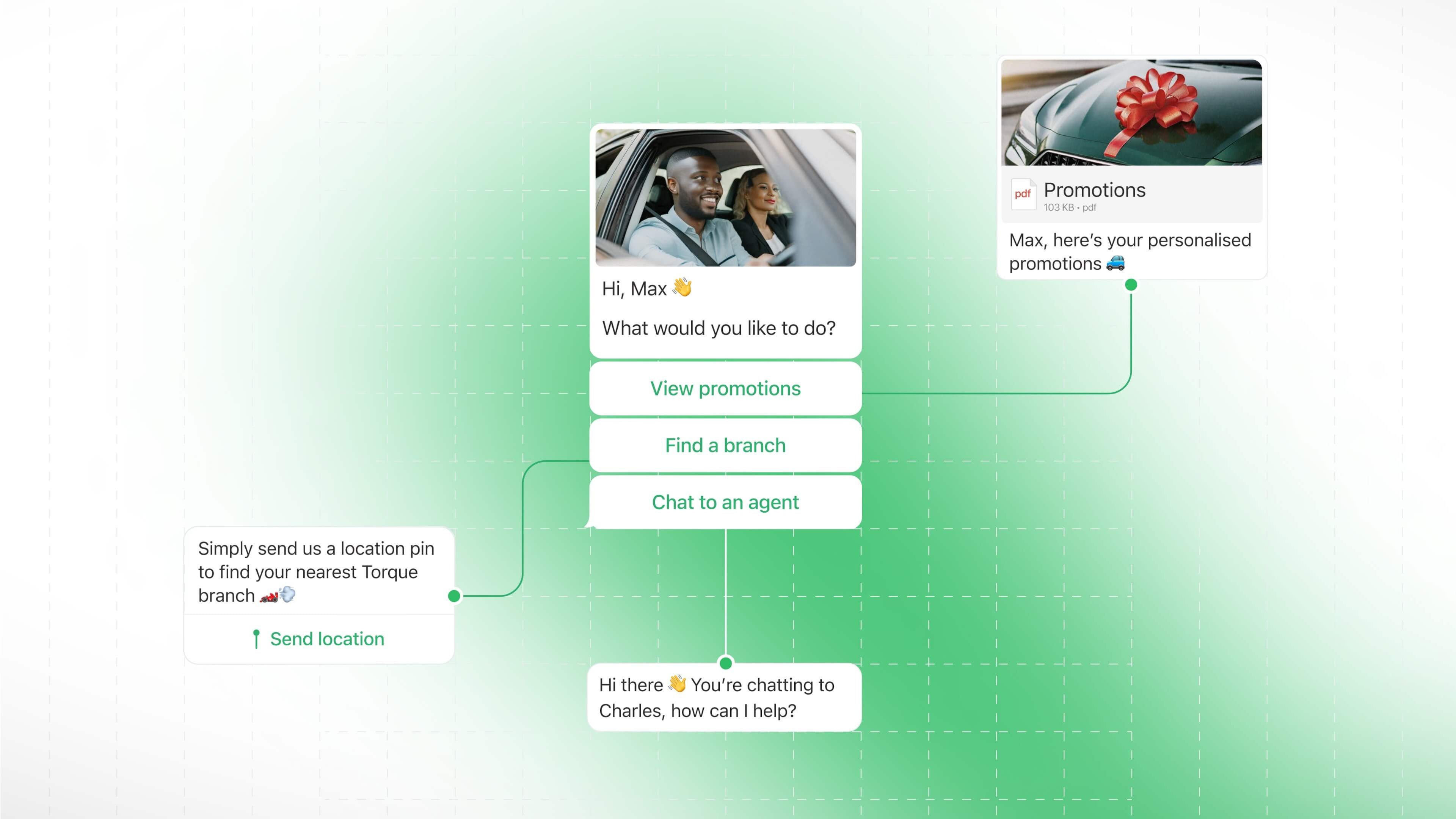
WhatsApp buttons and menus: every interactive message type, explained
Reply buttons, CTA buttons, list menus and template buttons: what each does, the limits Meta publishes, and how to build a working menu.
Read the guide
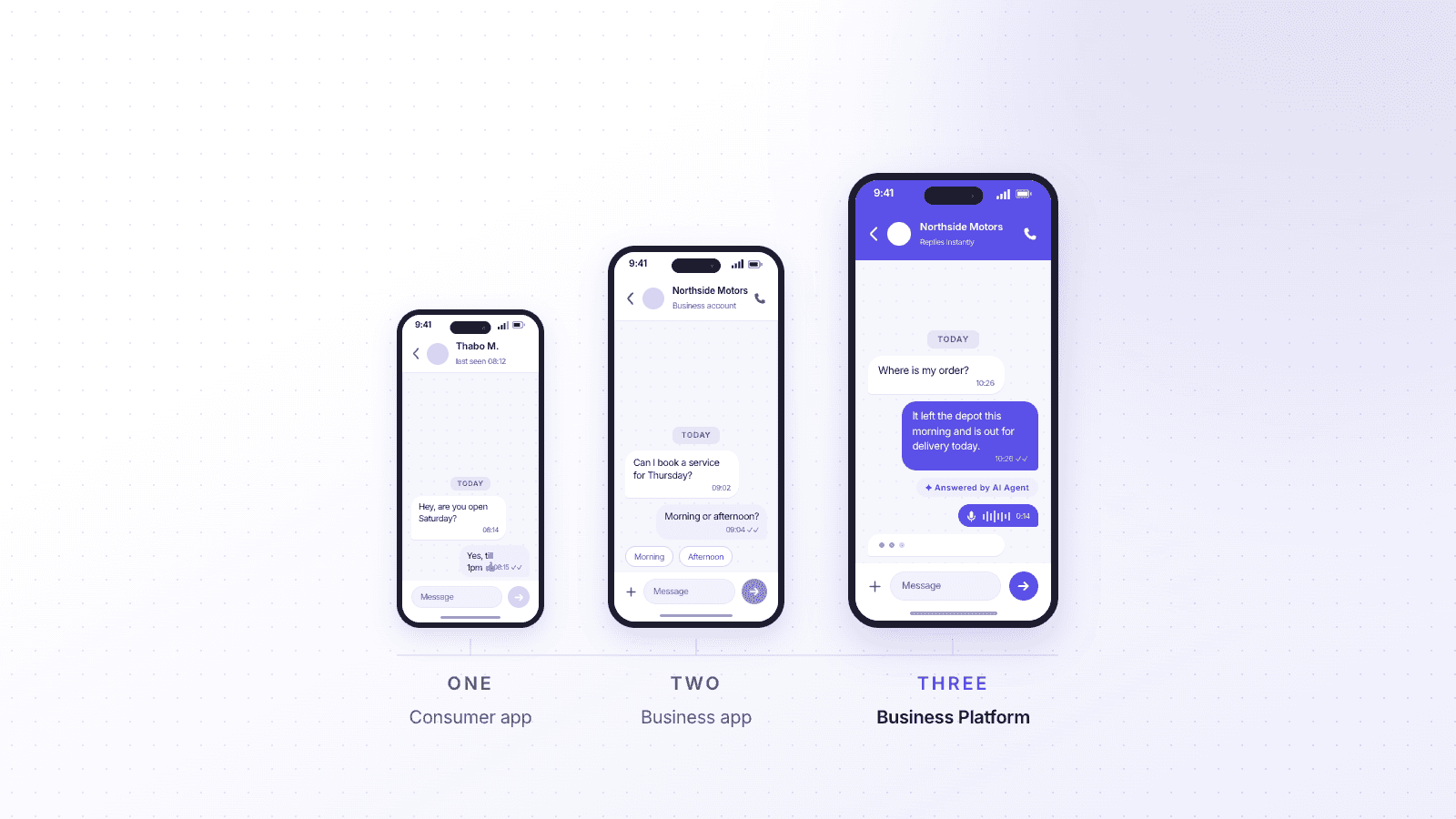
What is a WhatsApp Business account?
The three versions of WhatsApp explained, what the free Business app can and cannot do, and the signals that you have outgrown it.
Read the guide

Is WhatsApp Business free?
The free app really is free. Here is where the costs start, what Meta charges per message, and why the platform fee is the real decision.
Read the guide
