
Last updated
Grace Cowan


Key Takeaways
WhatsApp broadcasts reach a 98% open rate versus roughly 20% for email, making them the stronger channel for time-sensitive messages.
Broadcasts go to opted-in contacts only. When the content is relevant, recipients welcome them.
The most effective use cases share one trait: the message was something the recipient was going to want anyway.
Personalised broadcasts can boost conversions by up to 202%. Cue's Contacts feature lets you segment by customer type, purchase history, or behaviour before you send.
Cue's broadcast tool handles sending, scheduling, analytics, and reply management in one place.
WhatsApp messages have a 98% open rate. The average email sits at roughly 20%. So why are so many businesses still sending their most important updates by email?
The answer, in most cases, is habit. In 2026, Broadcasts are one of the most underused tools in a business communication toolkit, not because they are complicated, but because most businesses have not seen them applied to their specific context.
This article covers six WhatsApp broadcast use cases with real examples, plus a practical guide to what makes broadcasts effective: personalisation, segmentation, interactive messages, and templates.
What is a WhatsApp broadcast?
A WhatsApp broadcast is a message sent simultaneously to multiple opted-in contacts, delivered individually to each recipient as a private one-to-one conversation. Recipients do not see who else received the message, and replies come back directly to the sender. Using the WhatsApp Business API, you can send broadcasts at scale with personalised templates, segmented contact lists, and delivery analytics at the individual message level.
6 WhatsApp Broadcast Use Cases That Drive Real Results
The best WhatsApp broadcast use cases share a common trait: the message was something the recipient was already going to want or already going to be sent, e.g. payment reminders, appointment confirmations, delivery updates. When the content lands at the right moment, the channel advantage compounds.
1. Payment Reminders and Collections
Payment reminders sent via WhatsApp outperform every other channel for collections. WhatsApp messages are read within an average of five minutes of being received. That speed matters when an account is overdue.
Rather than waiting for your collections team to make individual calls (which often go unanswered), you can send automated broadcast sequences tied to payment due dates. A reminder goes out three days before the due date. Another on the day. A third the morning after a missed payment. Each message is personalised with the recipient's name, the amount owed, and a direct payment link.
ISPs, utilities, and subscription businesses use this approach to reduce overdue accounts at scale. For businesses operating on thin margins, even a modest improvement in collections timing has a direct effect on cash flow.
Cue, an omnichannel customer communication and WhatsApp Business API platform, has a Broadcasts tool that lets you schedule these sequences once and run them automatically. Messages go out on time, every time, without manual intervention.
2. Competitions and Loyalty Campaigns
WhatsApp-native competitions give FMCG (Fast-Moving Consumer Goods), beauty, and retail brands something email and social media cannot: a direct, opted-in communication channel built during the campaign itself.
Here is an example of how it works. A customer enters a competition by messaging a WhatsApp number, promoted via packaging or a point-of-sale mechanic. The entry creates an opt-in. You can then use that contact list to send ongoing loyalty communications, product updates, and future promotions, with the customer's explicit permission.
For example, a South African beauty brand group runs competitions this way across their portfolio. The competition drives opt-ins. The broadcast channel is the lasting commercial asset.
The key advantage over social media competitions is ownership. Organic reach on Facebook and Instagram fluctuates with algorithm changes. A WhatsApp broadcast list belongs to your business, not to a platform.
3. Delivery and Order Updates
"Where is my order?" is one of the most common customer service queries any logistics or retail business handles. It is also entirely preventable.
When you send real-time order status updates via WhatsApp, you see a significant reduction in inbound enquiries. When a customer receives a message saying their order has been dispatched, with a tracking link and an estimated delivery window, they do not need to call.
For example, a South African transport company uses WhatsApp broadcasts to keep customers informed at every stage of the logistics process. Customers receive updates when a collection is scheduled, when goods are picked up, and when a delivery is on its way. The result is fewer inbound queries and a team that can focus on genuinely complex issues.
For retail, the same logic applies. Brights Hardware increased WhatsApp-based sales by 244% after building WhatsApp into their customer communication flow. Restock alerts, order confirmations, and shipping notifications sent via WhatsApp convert at higher rates than the same messages sent by email.
4. Pricing and Product Updates
In fast-moving categories like wholesale, logistics, and FMCG, pricing changes frequently. Email newsletters get ignored. A WhatsApp broadcast to your active customer list does not.
This use case works because the content is commercially relevant to the recipient. A wholesale customer who buys regularly wants to know when prices change, when a product line is updated, or when seasonal stock arrives. Receiving that information via WhatsApp, before it is buried in an inbox, gives them time to adjust their own orders.
You can segment your contact list to make sure the right updates go to the right customers. A building materials supplier might send timber pricing updates only to the contractors on their list, while sending a separate broadcast to retail customers about new product ranges.
Save Hyper, a South African retailer, eliminated print media entirely from their promotional budget after switching to WhatsApp broadcasts. Reach and engagement improved while costs dropped.
5. After-Service Surveys and NPS
Getting customers to complete a survey after a service interaction is notoriously difficult. Email survey links achieve response rates in the low single digits for most service businesses. WhatsApp changes that.
The reason is simple: a WhatsApp message from a business you have just interacted with feels like a follow-up conversation, not a marketing email. The context is fresh, the message is short, and responding requires a single tap.
Worthing Motors, a UK automotive dealership, switched from phone calls to WhatsApp via Cue for their after-sales NPS process. Their survey engagement increased by 55%, with NPS returns rising from 111 completions in Q1 2025 to 173 in Q1 2026. That improvement directly translated into an additional £5,000 in quarterly manufacturer rebates from their OEM partner Stellantis.
For automotive, healthcare, and hospitality businesses where reputation scores have financial consequences, the difference in response rates between email and WhatsApp is not incremental. It is the difference between qualifying for a rebate and missing it.
6. Appointment Reminders and Confirmations
No-shows cost businesses real money. A dental practice with a 15% no-show rate is losing revenue on slots that could have been filled. An education provider with students who miss enrolment deadlines is losing conversions it already earned.
WhatsApp appointment reminders sent 24 to 48 hours before a scheduled appointment reduce no-shows more effectively than phone calls or SMS. Customers can confirm, cancel, or reschedule directly in the chat, which means your team knows in advance rather than waiting for a no-show to materialise.
Richfield, a South African education provider, switched from calling prospective students to WhatsApp broadcasts and live chat via Cue. Their response rate increased 7x, their call-to-action conversion rate hit 65%, and they over-achieved sales targets by more than 100%.
University College Birmingham used Cue's WhatsApp solution to improve student enrolment communications, ensuring prospective students received timely, relevant updates throughout their application process.
What makes a WhatsApp broadcast effective?
Sending a broadcast is the easy part. Getting it to land well requires a few things to be right: the right message, to the right contact, at the right moment. Here is what separates broadcasts that get results from broadcasts that get ignored.
Personalise every message
Generic broadcasts get ignored. Personalised ones get read.
WhatsApp Business API templates support dynamic fields, so you can include each recipient's name, account reference, appointment time, purchase history, or any other variable. The message arrives looking like it was written specifically for that person.
The impact is significant: personalised messages can boost conversions by up to 202%, according to research by Webstacks. The difference between 'Dear Customer, your appointment is tomorrow' and 'Hi Sarah, your 9am service booking is confirmed' is not subtle.
It is the difference between shouting into a crowd and speaking directly to one person. Even small personalisation signals, like using a first name, increase the likelihood that the message is read and acted on.
How do you segment a WhatsApp broadcast list?
The best broadcasts go to the right audience, not everyone at once. Sending a trade pricing update to retail customers wastes their time and yours.
Cue's Contacts feature lets you segment and label your customer base so you can send specific broadcasts to exactly the right people.
When your contact list is segmented, your broadcasts become relevant. And relevant broadcasts get read, responded to, and acted on. A utility company sending payment reminders only to overdue accounts, rather than their entire contact list, sees better response rates and avoids frustrating customers who are up to date.
Use interactive messages
Static text messages get read. Interactive messages get responses.
WhatsApp broadcasts support buttons, quick replies, and document attachments. Rather than sending a message a customer can only read and close, you can include:
A 'Confirm' or 'Reschedule' button on an appointment reminder
A 'Shop now' button on a promotional offer
A quick reply on an NPS prompt, such as 'Rate your experience: 1 / 2 / 3'
A PDF price list attached to a wholesale pricing update
A 'Book a test drive' button on an automotive launch broadcast
Interactive messages turn passive readers into active participants. They gather feedback, accelerate decisions, and move customers from awareness to action in a single message.
Which WhatsApp template type should you use?
WhatsApp requires all broadcast messages to use pre-approved templates, assigned to one of three categories. Choosing the right type matters for both compliance and performance.
Marketing templates are for promotional content: offers, product launches, sale announcements, loyalty campaigns, and competition entries. You create and submit these for approval via Cue, and once approved they can be sent to opted-in contacts immediately.
Utility templates are for transactional and service messages: payment reminders, order confirmations, appointment notifications, and delivery updates. These tend to have the highest engagement because the content is something the recipient was already expecting.
Authentication templates are for identity verification: one-time passwords, login confirmations, and transaction approvals. If your business handles secure transactions or account access, authentication templates let you send OTPs via WhatsApp instead of SMS.
See Cue's full guide to WhatsApp templates for step-by-step instructions on creating each type.
Track performance and optimise
WhatsApp broadcasts are not a set-and-forget channel. The WhatsApp Business API gives you delivery rates, open rates, click-through rates, and reply rates for every broadcast you send.
Cue's broadcast analytics dashboard shows you exactly which messages landed, which were read, and which prompted a response. You can see who is engaging and who is not, giving you the data to re-target unresponsive contacts with a follow-up or remove them from future sends to protect your sender reputation.
Over time, this data tells you which messages perform best, which times get the highest open rates, and which segments are most responsive. Every broadcast improves on the last.
WhatsApp Broadcast Use Cases by Industry
The table below maps broadcast use cases to the industries where they deliver the strongest results. Most businesses will find they have more than one applicable use case.
Industry | Primary Use Case | Secondary Use Case | Real-World Result |
|---|---|---|---|
Automotive | After-service NPS surveys | Appointment reminders | Worthing Motors: 55% increase in survey engagement, £5,000 additional quarterly rebate (UK) |
Retail | Pricing and promotional updates | Order and restock alerts | Save Hyper: 100% reduction in print media costs. Brights Hardware: 244% increase in WhatsApp-based sales. |
Education | Enrolment and application reminders | Course and fee information updates | Richfield: 7x increase in response rates, 65% CTA conversion, sales targets exceeded by 100% |
Utilities / ISPs | Payment reminders and collections | Service outage notifications | Automated sequences personalised with name, amount owed, and payment link, triggered by due date |
Logistics / Transport | Delivery and order updates | Trade pricing updates | Reduced inbound 'where is my order' queries across logistics operations |
FMCG / Beauty | Competitions and loyalty opt-ins | Product launch announcements | Opted-in contact list built via WhatsApp. |
Travel & Leisure | Booking confirmations and last-minute deal alerts | Itinerary updates and travel reminders | Booking confirmations reduce inbound queries. Last-minute deal broadcasts to opted-in customers drive direct conversions without paid media spend. |
Real Estate | New property listing alerts to opted-in buyers | Viewing appointment reminders and price change notifications | Property alerts sent to opted-in buyers accelerate response times and reduce the window between listing and first enquiry. |
See How Cue Handles Broadcasts
WhatsApp broadcasts work best when the messages are welcome, timely, and connected to a live reply experience. Cue's Broadcasts product lets you send personalised campaigns at scale, schedule messages for when your customers are most active, and track delivery, open, and response rates in real time.
When a customer replies, that conversation lands in Cue's unified inbox, where your team or Cue's AI Agents can respond automatically. The whole loop, from broadcast to conversation to resolution, runs from one platform.
Book a Cue demo to see broadcasts in action.
Frequently asked questions
Are WhatsApp broadcasts spam?
How many contacts can you send a WhatsApp broadcast to?
Can you personalise WhatsApp broadcast messages?
Do broadcast recipients know others received the same message?
How do you measure WhatsApp broadcast performance?
About the author

Grace Cowan
Head of Marketing
Grace is Head of Marketing at Cue, an omnichannel customer service platform. She works across B2B SaaS growth, customer experience and AI-led service, sharing practical insights on WhatsApp Business, customer communication and the strategies businesses can use to improve service and drive revenue.
Further reading
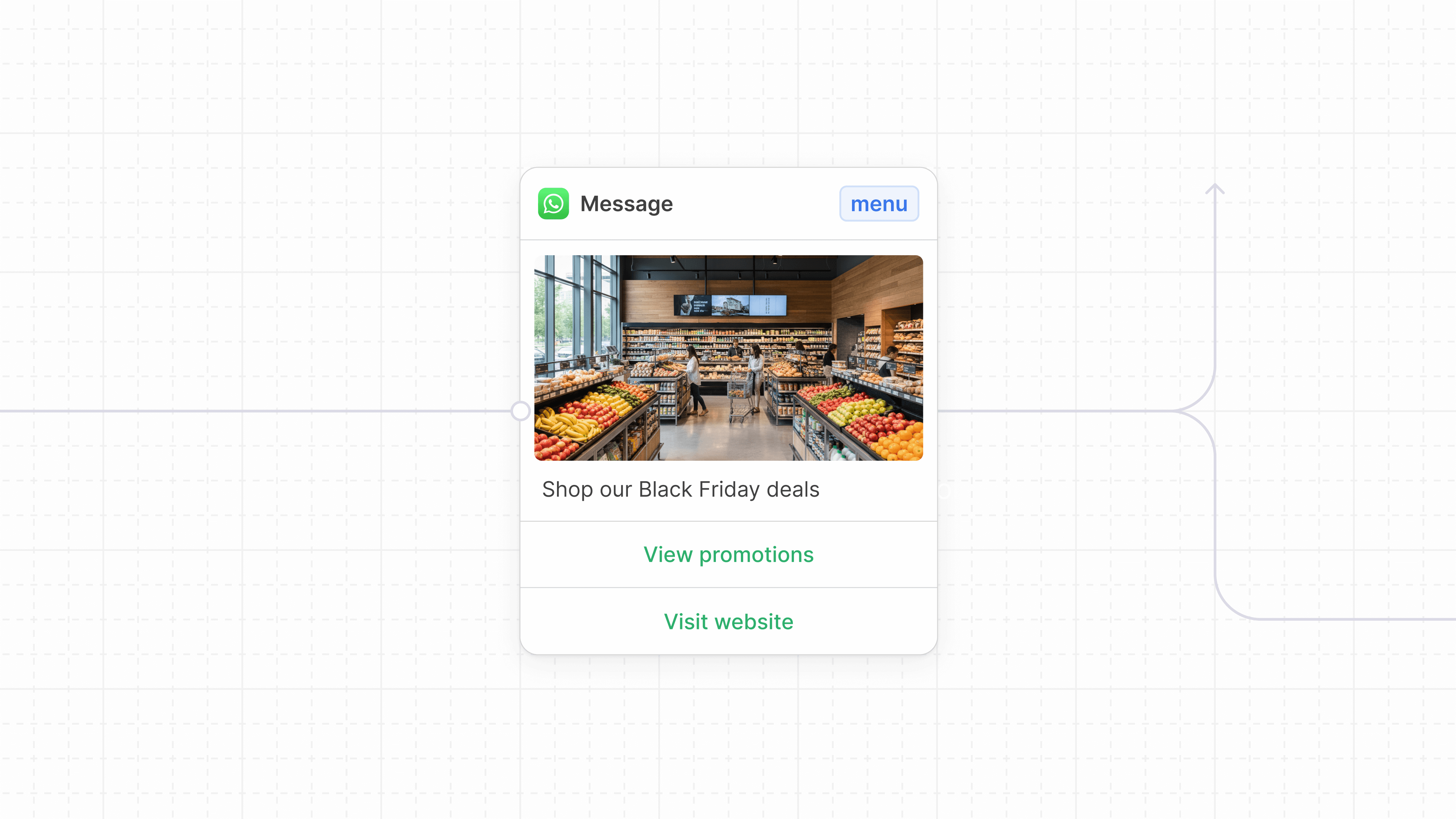
Black Friday on WhatsApp: what to set up, and by when
Black Friday 2026 lands on 27 November. The timeline for template approval, messaging limits and sending, working backwards from the day.
Read the guide
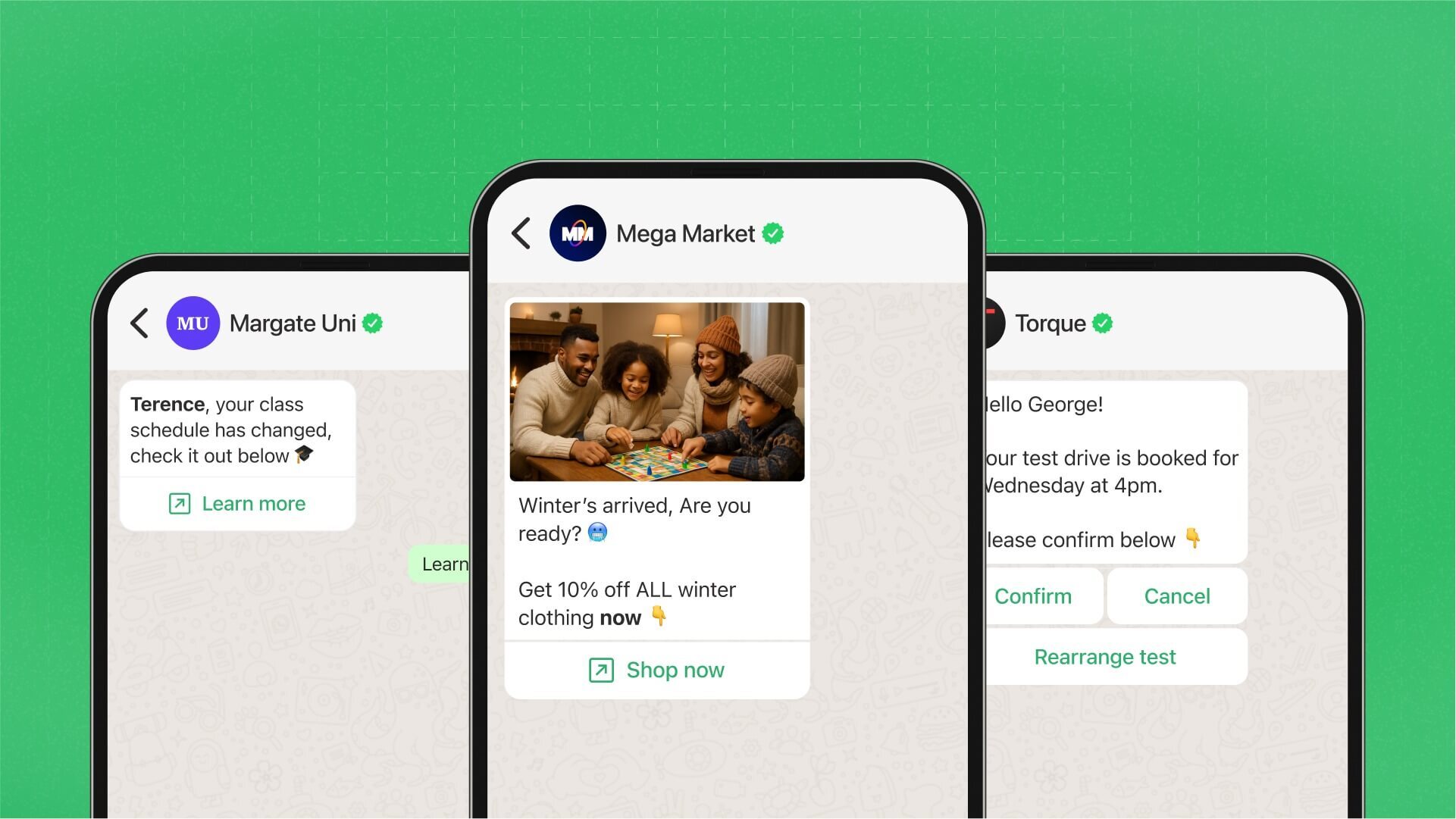
WhatsApp broadcast best practices: Tips for maximum impact
WhatsApp Broadcasts personalises messaging that boosts engagement, conversions, and customer loyalty.
Read the guide

Boost sales with these 10 WhatsApp marketing broadcasts
Your customers are scrolling past your marketing emails. Enter WhatsApp broadcasts.
Read the guide
