
Last updated
Grace Cowan


On 1 October 2026, Meta starts charging for WhatsApp service messages again. On the same date, utility template messages sent inside an open 24-hour customer service window stop being free. What you actually pay then depends on your provider: Cue includes 1,000 service messages a month on every business phone number and charges £0.02 for each one after that in the UK.
If you run customer service on WhatsApp, your bill is about to look different. Nothing changes about when you can message a customer. What changes is what you pay for the messages you were already sending.
Here is what is changing, what stays free, and what it will cost.
What changes on 1 October
Three things change. None of them affect the rules about when you can send.
Until 30 September 2026 | From 1 October 2026 | |
|---|---|---|
Service messages inside the 24-hour window | Free | Charged per delivered message |
Utility templates inside an open 24-hour window | Free | Charged |
Rate applied to service messages | Not applicable | Your market's utility and authentication rate |
The 24-hour customer service window itself is untouched. A customer message opens it, each new customer message resets it, and once it closes you still need an approved template to start a conversation. That has not changed and is not changing.
Worth knowing: Meta has charged for service conversations before. They became free on 1 November 2024, and before that they were billed under the old conversation-based model. So this is a return to charging rather than something new.
How WhatsApp pricing works now
Meta charges per delivered message. Not per conversation, and not per template you create.
That model took effect on 1 July 2025, replacing conversation-based pricing. If you have read older guidance describing 24-hour conversation windows as billable units, it is out of date.
What you pay depends on two things: the category of the message and the country of the person receiving it.
There are three template categories:
Marketing. Promotions, offers, product news, re-engagement.
Utility. Tied to a specific action or request the customer has made. Order confirmations, delivery updates, appointment reminders. Non-promotional.
Authentication. One-time passcodes only. No media, no URLs, no promotional content.
Utility and authentication share a single rate in each market. Marketing is priced separately and is usually the most expensive. If a message mixes promotional and transactional content, Meta classifies it as marketing.
From 1 October, service messages join the utility and authentication rate band.
Rates change only on the first day of a calendar quarter, and Meta gives at least a month's notice for a rate card change and six months for a change to the pricing model itself. That is useful for budgeting: your per-message costs cannot move mid-quarter without warning.
[EDITORIAL HOLD: insert Meta's current UK and South Africa utility and authentication rates, effective 1 October 2026, with currency and effective date. Source: Meta's published rate card, or Cue finance. Do not publish without the figures confirmed.]
You can check Meta's current rate card for any market on the WhatsApp Business Platform pricing documentation.
What you still don't pay for
Plenty is still free, and some of it is worth designing around.
What | Cost |
|---|---|
First 1,000 service messages per business phone number, per calendar month | Free |
Messages that are not delivered | Not charged |
Messages inside a free entry point window | Free |
Receiving messages from customers | Not charged |
Three details matter more than they first appear.
The allowance is per phone number, not per account. If you run three WhatsApp numbers, you get 3,000 free service messages a month across them, not 1,000. The allowance resets every calendar month and does not roll over. Charging starts at the 1,001st delivered service message on that number.
Only delivered messages are billed. A message that fails does not cost anything.
The free entry point window runs for 72 hours. When someone reaches you through an ad that clicks to WhatsApp, or a call-to-action button on a Facebook Page, and you reply within the first 24 hours, eligible messages in that 72-hour window are free. If you are already running click-to-WhatsApp campaigns, that is a meaningful amount of free conversation you may not be counting.
Meta sets the underlying rate by message category and by the recipient's market. What lands on your invoice is whatever your provider charges for those messages, which is not always the same number. That distinction matters enough to have its own section below.
What it costs: a worked example
Numbers help more than rules here. This example is illustrative, not a quote.
Take a service team on one WhatsApp number, handling around 1,500 customer conversations a month. Say each conversation takes three replies from an agent. That is 4,500 service messages.
First 1,000 included in your Cue plan: no charge
Remaining 3,500: charged
At Cue's rate of £0.02 per service message, that is £70 a month. In South Africa, at R0.15 per service message, the same volume is R525 a month.
Change the shape of the team and the answer moves. A business doing 400 conversations a month at two replies each sends 800 service messages and pays nothing. A support desk running 10,000 conversations at four replies each sends 40,000, of which 39,000 are chargeable.
That is the calculation worth doing before October: conversations per month, multiplied by average replies per conversation, minus the 1,000 included on each number.
Cue's terms, confirmed. From 1 October 2026, every Cue customer gets 1,000 service messages a month on each business phone number. Beyond that, Cue applies £0.02 per service message in the United Kingdom and R0.15 per service message in South Africa. This is a pass-through of Meta's change. No other Cue rate or pricing is changing. The charge appears for the first time on invoices issued at the end of October or early November, covering the October billing period.
Meta's charge isn't the only charge
This is the part most pricing guides skip, and it is where businesses get caught out.
There are three separate layers to what you pay for WhatsApp:
Meta's per-message charge, set by Meta, by category and market.
What your provider charges you for those messages, which may be the same as Meta's rate, or more.
Your provider's platform or subscription fee, which is separate from message costs.
Providers handle the middle layer very differently, and it is not always obvious from a pricing page. Some pass Meta's charges through directly. Some add a percentage on top. Some apply their own rate card that does not map to Meta's at all.
Two published examples, both read on 11 September 2026. Front's pricing page states that WhatsApp costs are billed by Meta plus a 20% administration fee. respond.io states that WhatsApp fees are not included in any of its subscriptions and that it does not add a markup. Neither approach is wrong, but they produce very different bills at volume.
Three questions worth asking any provider before you sign:
Do you charge Meta's rate, or your own rate?
If it is your own rate, how does it compare to Meta's for my markets and message categories?
Is there a platform fee on top, and what does it include?
Cue's position is the first of those. £0.02 and R0.15 are what Cue charges per service message from 1 October, applied as a pass-through of Meta's change. The platform fee is separate and published: plans start at £249 a month with unlimited seats on every tier, so messages are the only part of the bill that moves with volume.
How to send fewer service messages
The cheapest service message is one you did not need to send. A few things genuinely reduce volume, and all of them are based on how Meta actually bills.
Resolve in fewer messages. Billing is per message, not per conversation, so a conversation settled in two replies costs half of one settled in four. Interactive elements do a lot of work here: reply buttons and list menus let a customer choose an option instead of typing a question that needs interpreting and answering.
Answer routine questions before an agent is involved. Cue's AI Agents answer from your own approved content, such as web pages and uploaded documents, and hand the conversation back to a Flow when they cannot help. Questions resolved that way do not become long agent threads. Answers are only as current as the content behind them, so the knowledge source needs maintaining.
Use the free entry point window. If you run ads that click to WhatsApp, replying within the first 24 hours opens a 72-hour window where eligible messages are free. Campaign timing and staffing decide whether you get that or not.
Review the flows you already have. Automated sequences written when service messages were free may now be sending messages that cost money without adding anything. That is worth an audit before October rather than after the first invoice.
What this means in South Africa
The model is the same in South Africa. Per delivered message, 1,000 free service messages per business phone number per month, charged after that at the market's utility and authentication rate. Cue's rate is R0.15 per service message from 1 October 2026.
Two things are specific to the market.
South African utility and authentication rates are increasing on 1 October, alongside the service message change. So South African businesses see two adjustments on the same date rather than one.
And Meta publishes its rate cards in GBP and USD but not in rand. South African businesses are billed by Meta in dollars, which means the underlying cost moves with the exchange rate as well as with Meta's pricing. Worth factoring into a budget rather than discovering later.
What to do before October
Work out your number first. Conversations a month, multiplied by average agent replies, minus the 1,000 included on each phone number. Most teams find the answer is smaller than they feared, and the ones who find it large have something worth fixing in how they reply.
If you are weighing up WhatsApp for customer service and want to know what it will cost you from October, book a demo and we will work through your expected volumes with you rather than a generic example. Cue's pricing sets out the plans alongside it.
Already a Cue customer? Our Customer Success team can review your WhatsApp workflows and find where service message volume can come down, covering conversation flow design, agent practice and response efficiency. Email support@cuedesk.com, or speak to your account manager if you are on paid support.
Frequently asked questions
What counts as a service message?
Does the 24-hour window change on 1 October?
What happens if I go over the included messages?
Do I pay for messages that are not delivered?
About the author

Grace Cowan
Head of Marketing
Grace is Head of Marketing at Cue, an omnichannel customer service platform. She works across B2B SaaS growth, customer experience and AI-led service, sharing practical insights on WhatsApp Business, customer communication and the strategies businesses can use to improve service and drive revenue.
Further reading
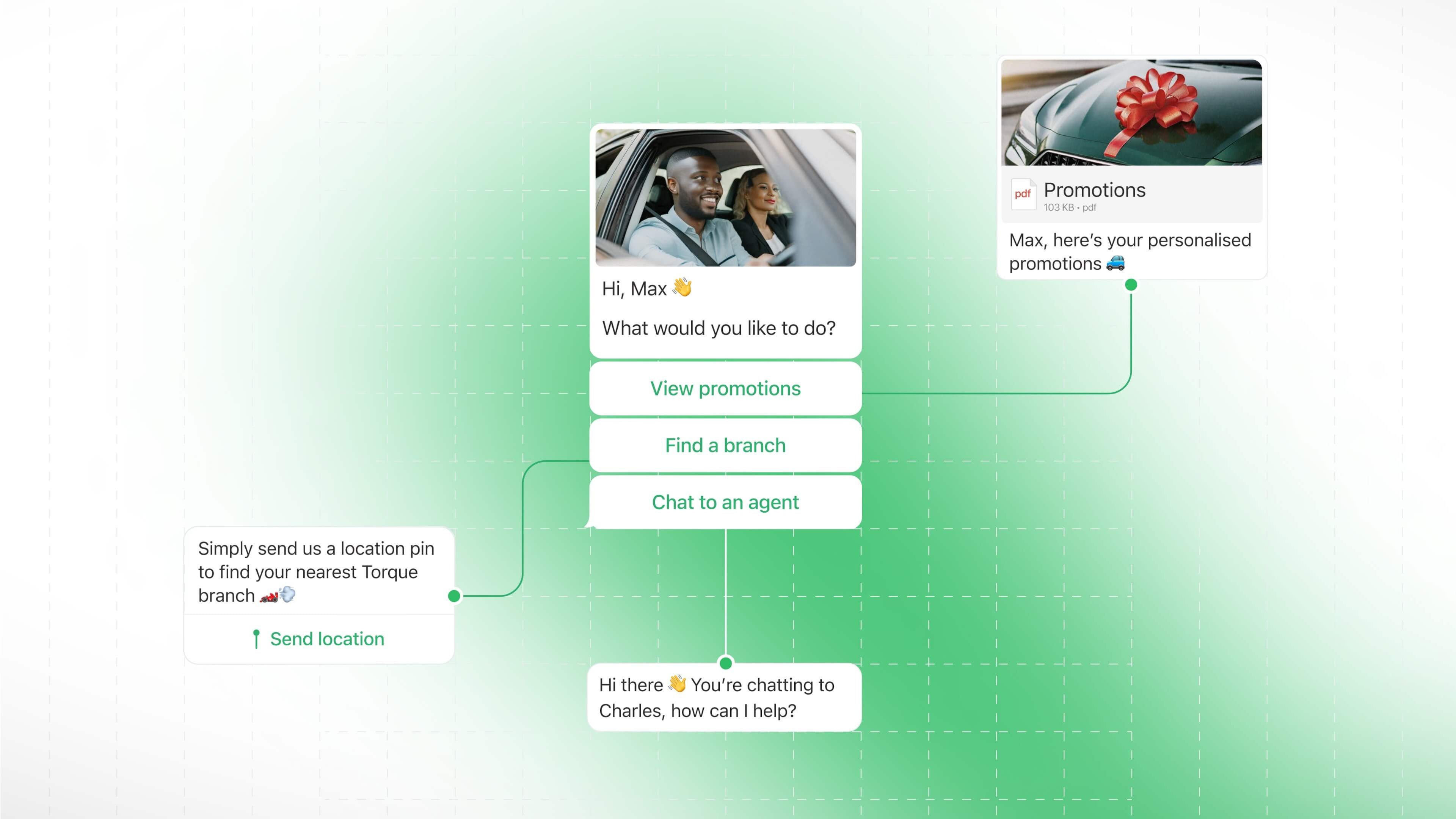
WhatsApp buttons and menus: every interactive message type, explained
Reply buttons, CTA buttons, list menus and template buttons: what each does, the limits Meta publishes, and how to build a working menu.
Read the guide
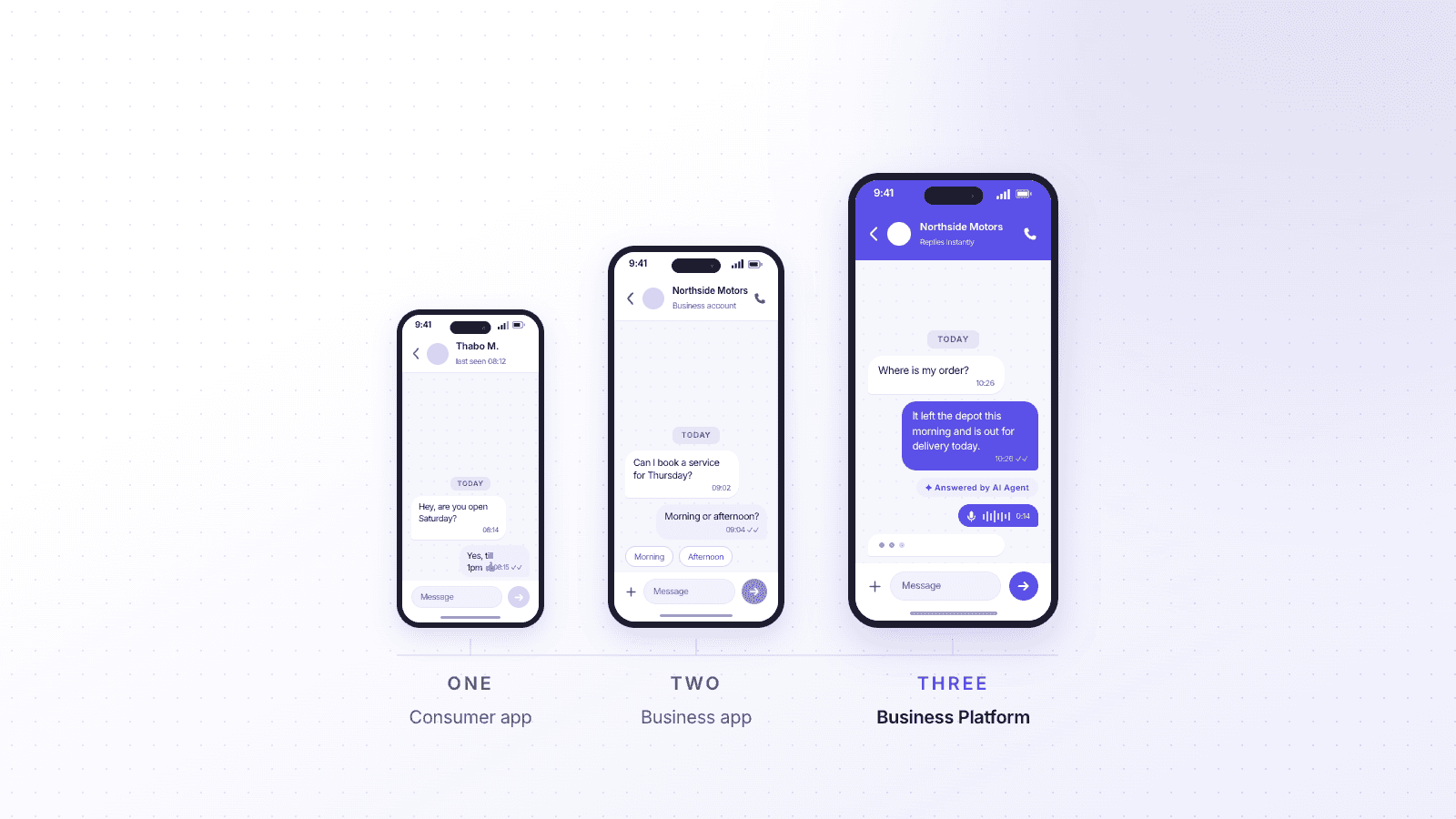
What is a WhatsApp Business account?
The three versions of WhatsApp explained, what the free Business app can and cannot do, and the signals that you have outgrown it.
Read the guide

Is WhatsApp Business free?
The free app really is free. Here is where the costs start, what Meta charges per message, and why the platform fee is the real decision.
Read the guide
