A WhatsApp Business Solution Provider, usually shortened to BSP, is a company approved by Meta to give businesses access to the WhatsApp Business API. You cannot get this access directly from Meta as an individual business, so the provider you choose is not a small decision bolted onto the end of a WhatsApp project, it is most of the project. The wrong choice means a slow shared inbox, unclear pricing, or no real path to connect WhatsApp to the rest of your business. The right choice means a working channel inside a week and a clear answer to what it costs and why.
What is a WhatsApp Business Solution Provider?
Meta does not sell direct access to the WhatsApp Business API to individual businesses. Instead, it approves a set of companies, called Business Solution Providers, to verify businesses, manage message template approval, and build the tools that sit on top of the raw API, such as a shared inbox, automation and reporting. Choosing a provider is choosing who verifies your business, who you pay, and what your team's day to day experience of WhatsApp actually looks like.
This is different from picking a piece of software off a shelf. A provider is an ongoing relationship, since they hold your verification, manage your template approvals, and are the first call when something breaks. The checklist below is built around that reality rather than treating the decision as a simple feature comparison.
8 things to check before choosing a WhatsApp Business Solution Provider
1. Confirmed Meta Business Partner status. Ask for proof, not just a claim on a website, since this is what allows the provider to give you verified access at all.
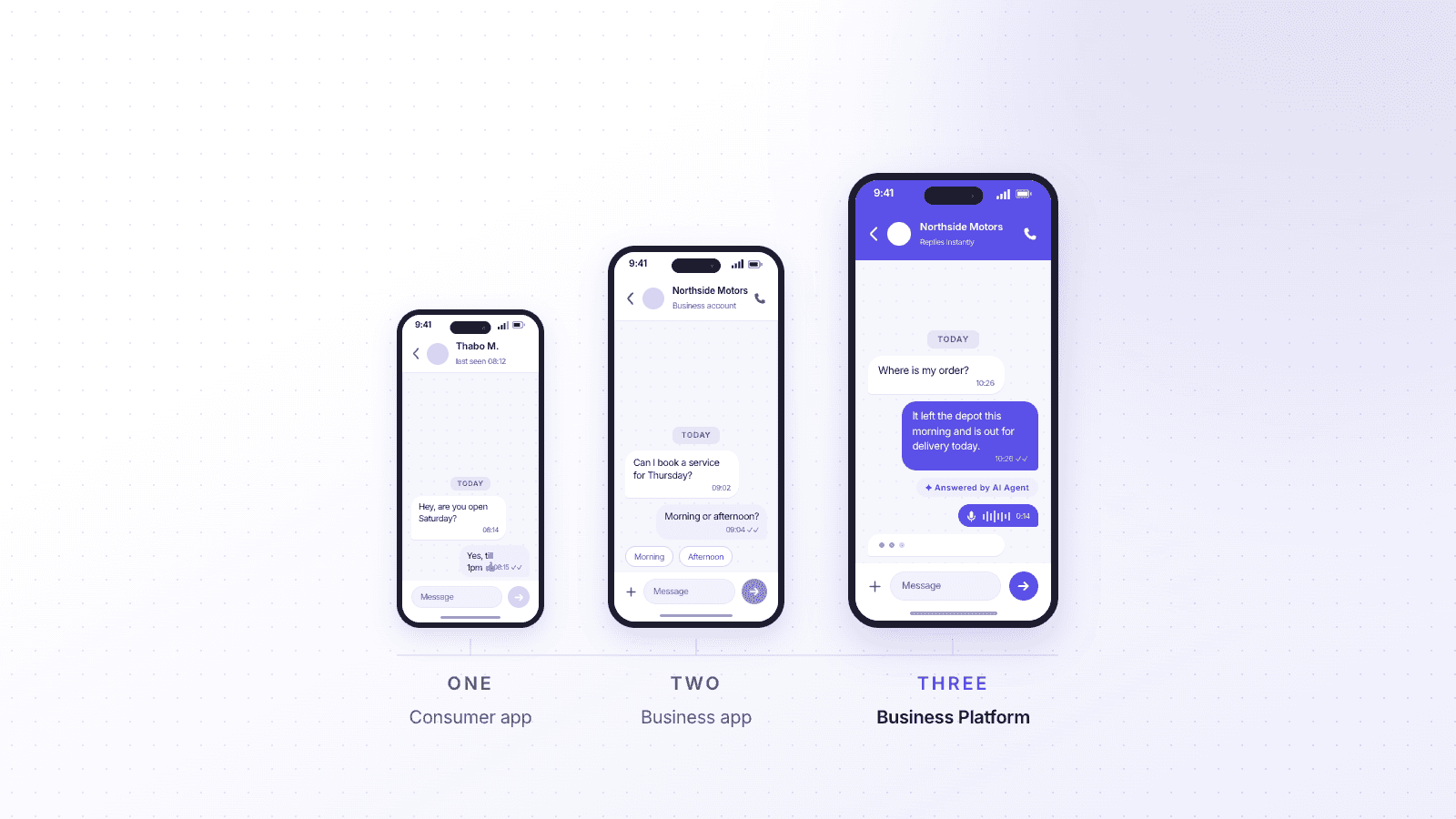
2. A shared inbox built for teams. Check whether more than one agent can see and reply to the same conversation at once, not just whether multiple logins exist.
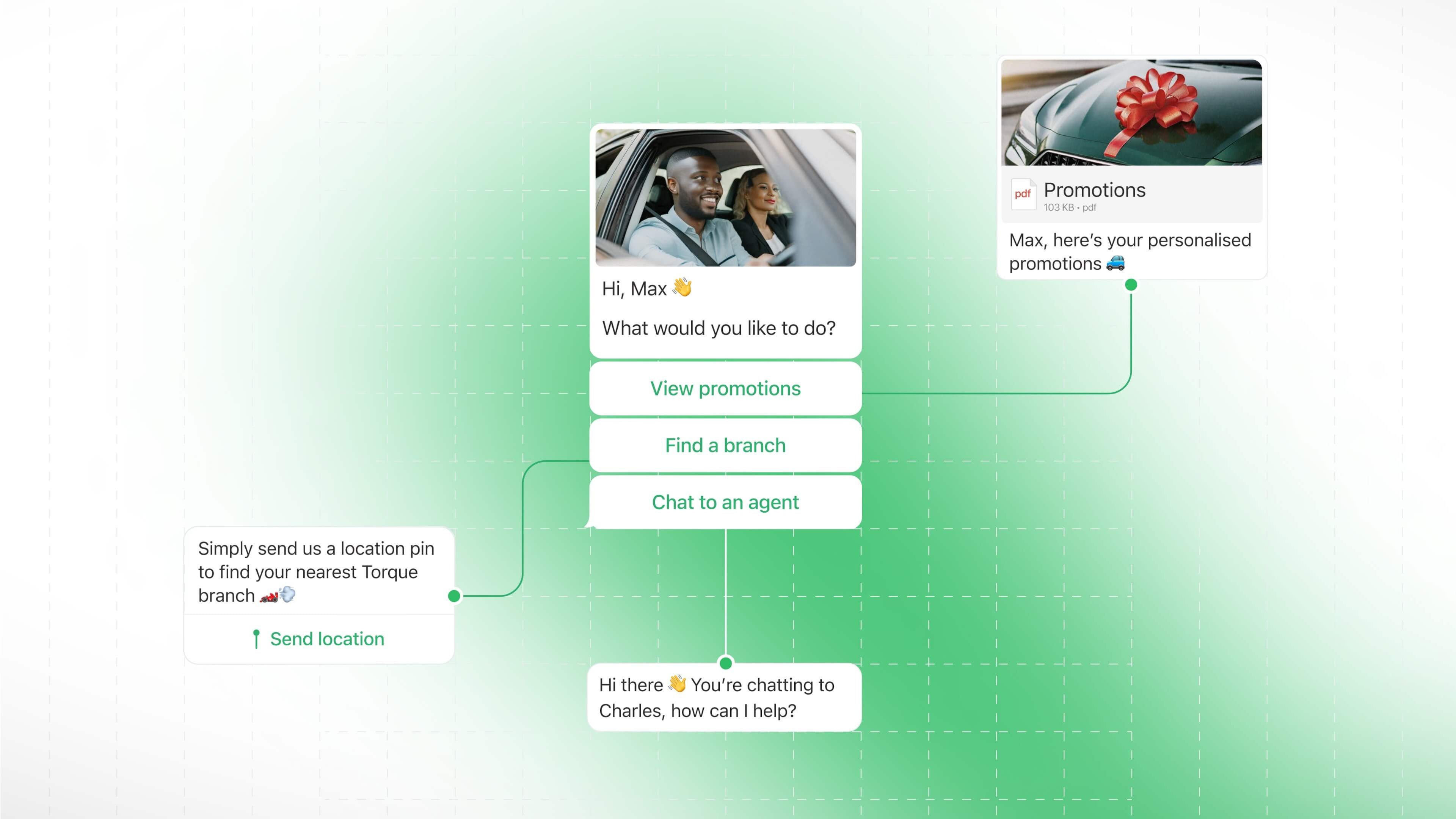
3. Automation that hands off to a person with full context. Ask what happens when automation cannot answer a question, and whether the customer has to repeat themselves.
4. Real integration with your CRM or DMS. Ask for the specific systems they connect to, not a general claim of compatibility with anything.
5. Transparent pricing that separates their fee from Meta's own conversation based charges. If a provider cannot explain this split clearly, expect billing surprises later.
6. Evidence of real results with named customers. A provider confident in their platform will point to specific businesses and specific numbers, not just generic claims.
7. Support for template approval and ongoing compliance. Meta's messaging policies change, and your provider should be managing that on your behalf, not leaving you to track it.
8. A migration path that keeps your existing number and account history. Ask exactly what happens to your current WhatsApp Business Account during onboarding.
Questions to ask a provider before you sign
Question | Why it matters | What a strong answer sounds like |
Are you an official Meta Business Partner? | This is the legal basis for giving you API access at all | A direct yes, with evidence available on request |
How is your fee structured relative to Meta's own charges? | Prevents confusion later about what you are actually being billed for | A clear split between the provider's platform fee and Meta's conversation based fee |
Can more than one agent work from the same number at once? | Determines whether this actually solves a growing team's problem | Yes, through a shared inbox, with no limit tied to logins |
What happens when your automation cannot answer a question? | Reveals whether automation is designed to protect the customer experience | Automatic handover to a person with the full conversation attached |
Which CRMs or DMS platforms do you already integrate with? | Avoids discovering a gap after you have committed | A specific, named list, not a general claim of compatibility |
Can you name a customer with a similar profile to us? | Tests whether their evidence is real and relevant | A named business and a specific, verifiable result |
Red flags that mean you should walk away
Pricing that is vague or only available after a sales call, with no willingness to explain the split between their fee and Meta's own charges.
No named customers or case studies, only generic claims about results without a business you can look up.
No clear answer on what happens when automation fails to resolve a query, suggesting the handover to a person has not been designed properly.
A vague or evasive answer about CRM or DMS integration, often a sign that connections are built ad hoc per customer rather than properly supported.
Pressure to sign quickly without a clear onboarding timeline, which often means the migration process itself is not well defined.
What good looks like in practice
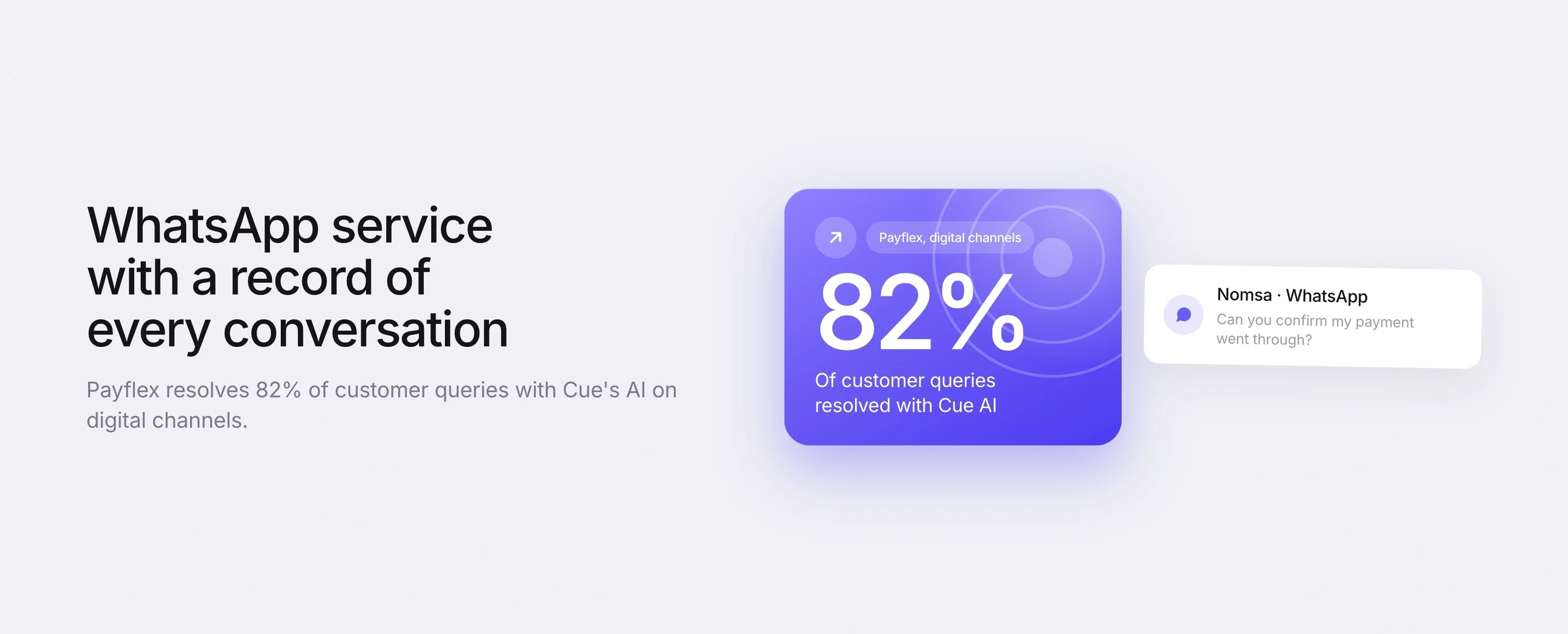
The clearest way to judge a provider is by what has actually happened for other businesses on their platform. Stellantis brands increased their response rate by 196 percent network wide and lifted NPS scores by 14 points after moving onto one connected WhatsApp platform, evidence of what a shared inbox and consistent process can do at scale. Dream Drive doubled added to cart conversion, from 20 percent to 40 percent, once instant, always on replies replaced slow, scattered responses across email, Messenger and Instagram. Save Hyper eliminated print costs entirely and moved more than 2 million leaflets onto WhatsApp, evidence that a well chosen provider relationship pays off well beyond customer service alone.
None of these results came from the API as raw technology. They came from a provider that built a proper shared inbox, sensible automation, and a real connection between WhatsApp and the rest of the business. That is the standard to hold any provider you are evaluating against.