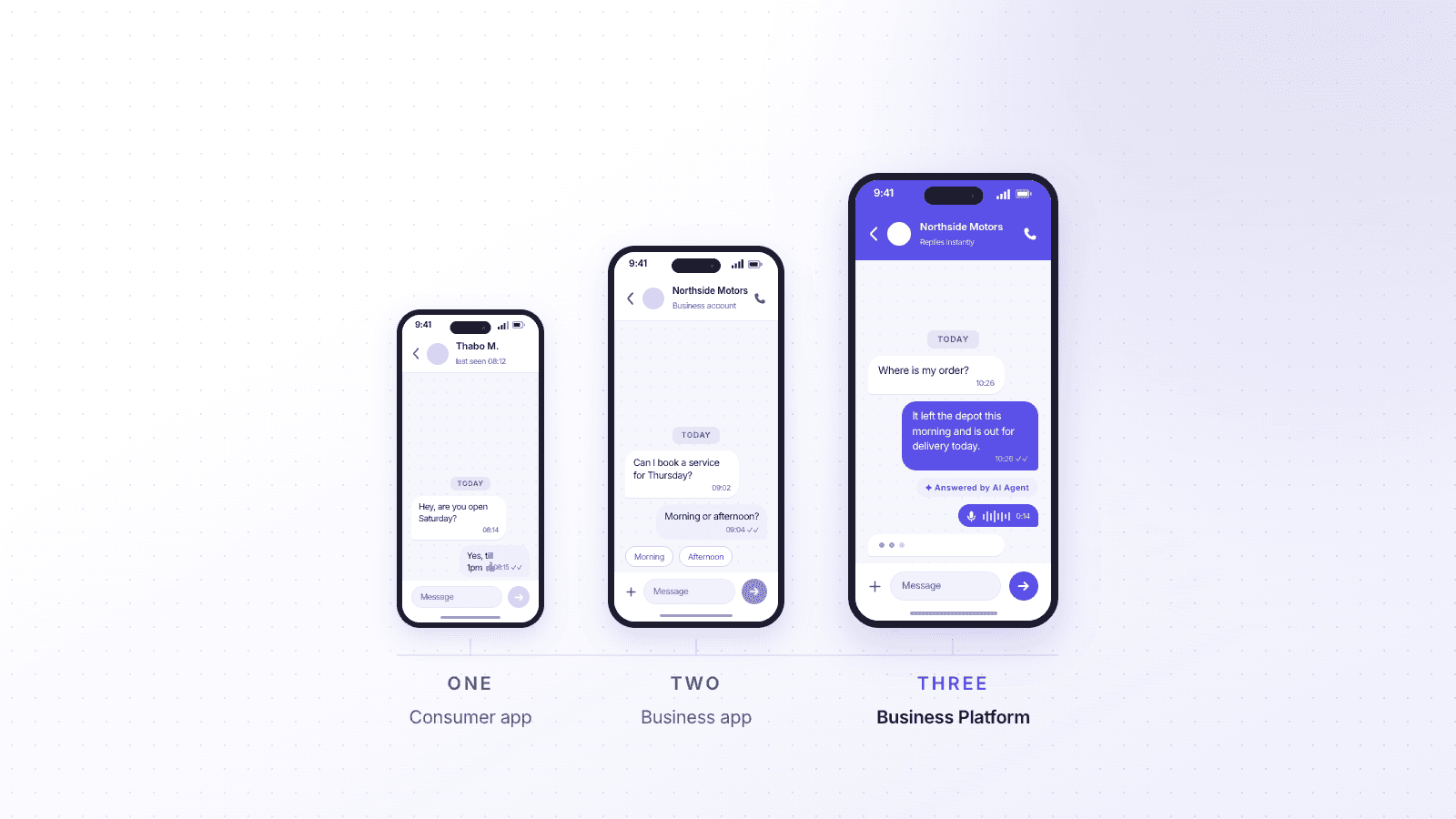

A South African bank, lender or insurer can use WhatsApp for customer service by running it as a proper service channel. That means handling product queries, application and document updates, claim status and complaints on WhatsApp, with a named owner for each conversation, a kept record and a clear route to a person. Marketing messages are a separate job with separate consent rules, so keep them out of the service workflow.
Switching WhatsApp on is the easy part. In financial services, customers are sharing personal details, often when something has gone wrong, and the FSCA expects you to treat them fairly while you do it. So the real work is deciding who owns what, what gets recorded, and when a person steps in.
What financial services customers contact you about on WhatsApp
Customers of SA banks, lenders and insurers use WhatsApp for the same things they’d otherwise phone or email about. The mix varies by business, but you can expect requests like these:
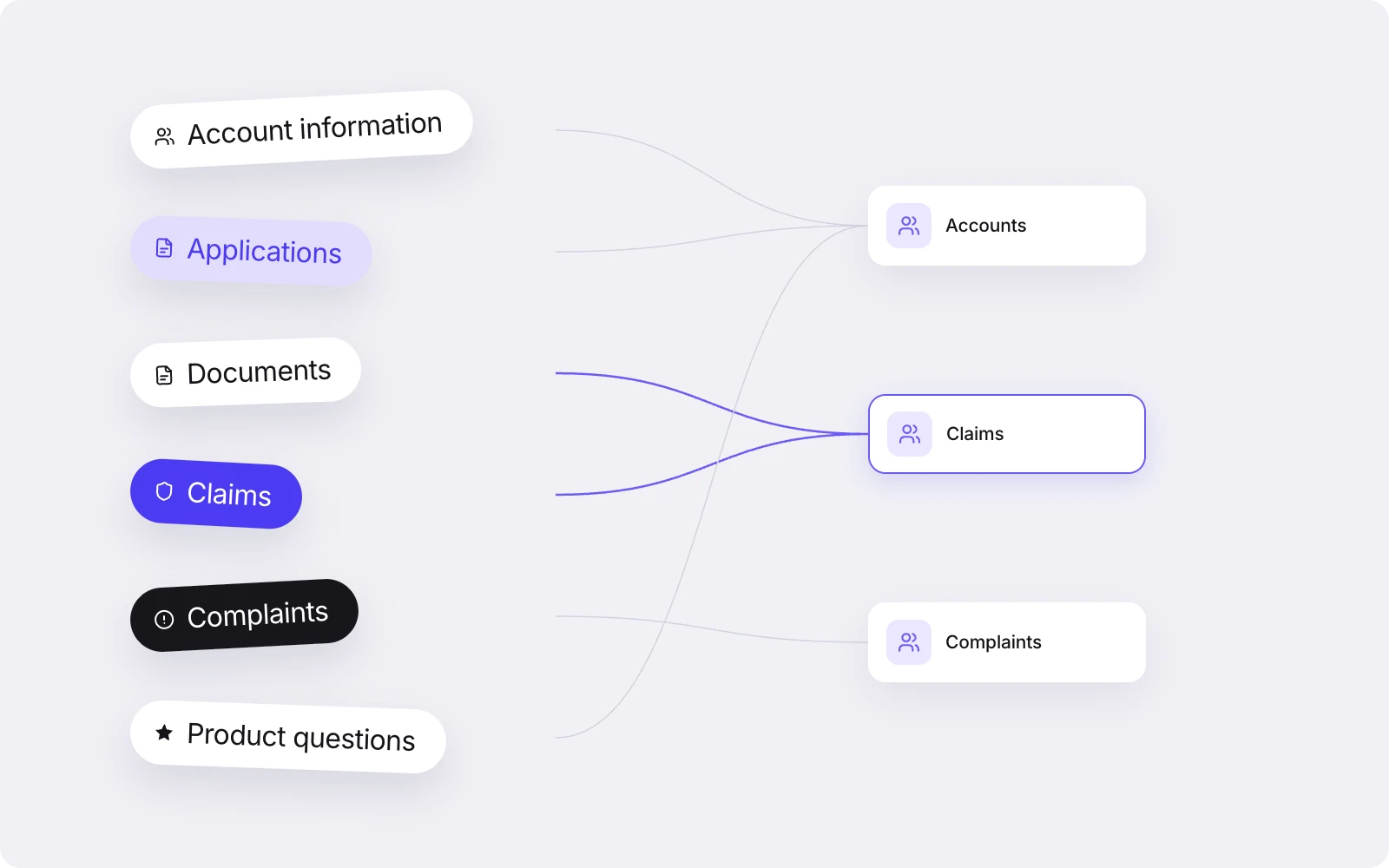
Account information. Balance or statement requests are requests for information about the customer’s own account. They need identity checks and either a person or your secure app, not a general answer.
Applications. “Has my loan application gone through?” or “Where’s my policy schedule?”
Documents. What’s still outstanding, and where to send it. WhatsApp is a good place to tell a customer what’s missing. Whether the document itself comes through the chat or through your secure portal is a decision for your compliance team.
Claims. Status, next steps, and who is handling it.
Complaints. Sometimes clearly labelled, often not. A frustrated message about an unexpected fee may well be a complaint.
Product questions. How a fee works, what a policy covers, how to update details. Many of these can be answered from approved content.
Each type needs a different owner and a different level of care. Sorting them early, before they land in one long queue, is most of the battle.
Claims and policy queries on WhatsApp
An insurer can handle claims and policy queries over WhatsApp by using it for three jobs: status updates, document collection and a clean handover to the assessor.
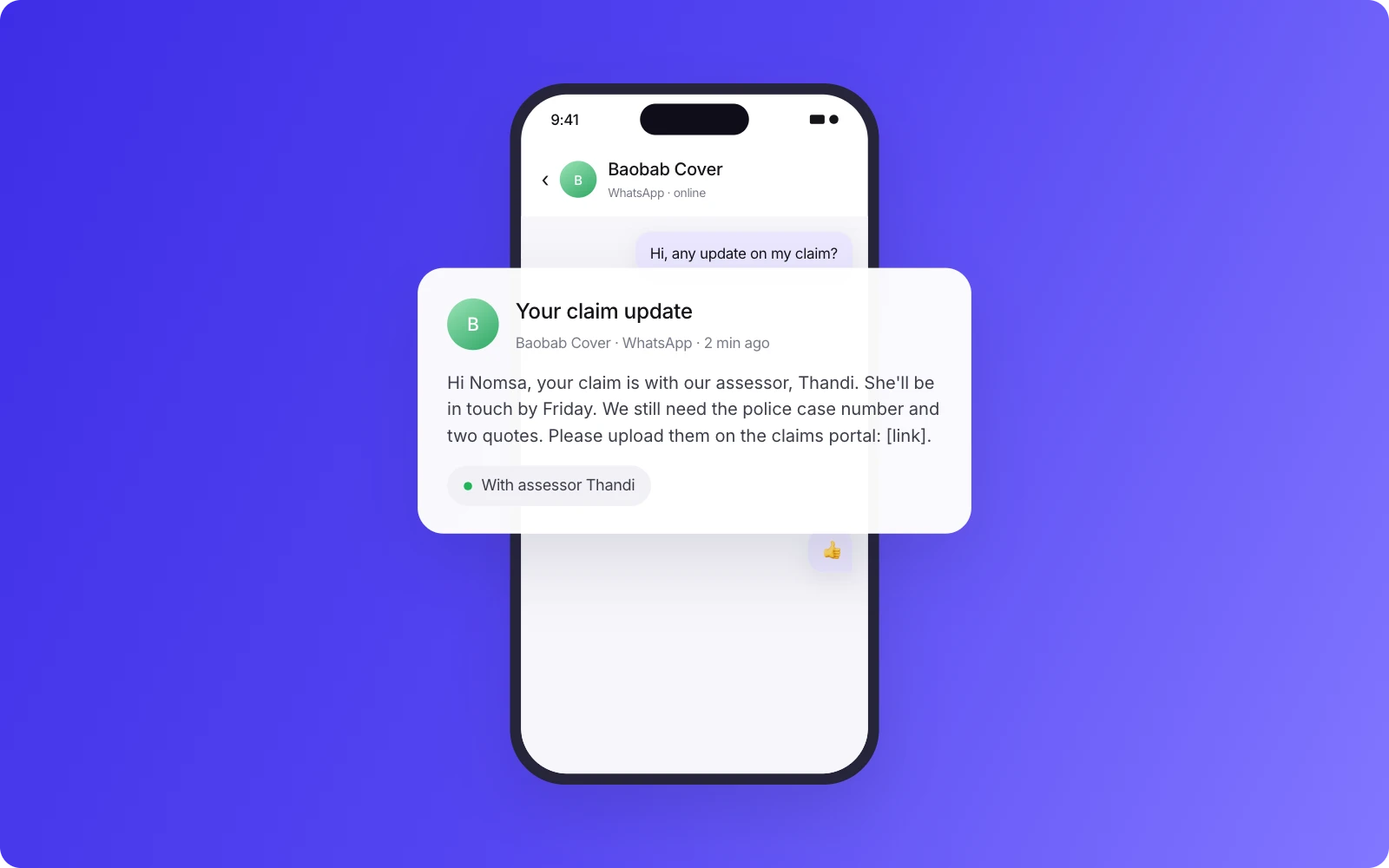
Status updates. Tell the customer where the claim is, what happens next and who’s dealing with it. A short, specific message (“Your claim is with our assessor, Thandi. She’ll be in touch by Friday”) does more than a generic “we’re processing your claim”.
Document collection. Be exact about what’s outstanding. “We still need the police case number and two quotes” saves a round of back and forth. Agree upfront which documents can come through the chat and which must go through your claims portal.
Handover to an assessor. When the claim moves to an assessor, the conversation should move with it. The assessor sees what the customer has already said and sent, so the customer doesn’t have to explain the accident twice. If a call makes more sense, the assessor can phone the customer from the same record.
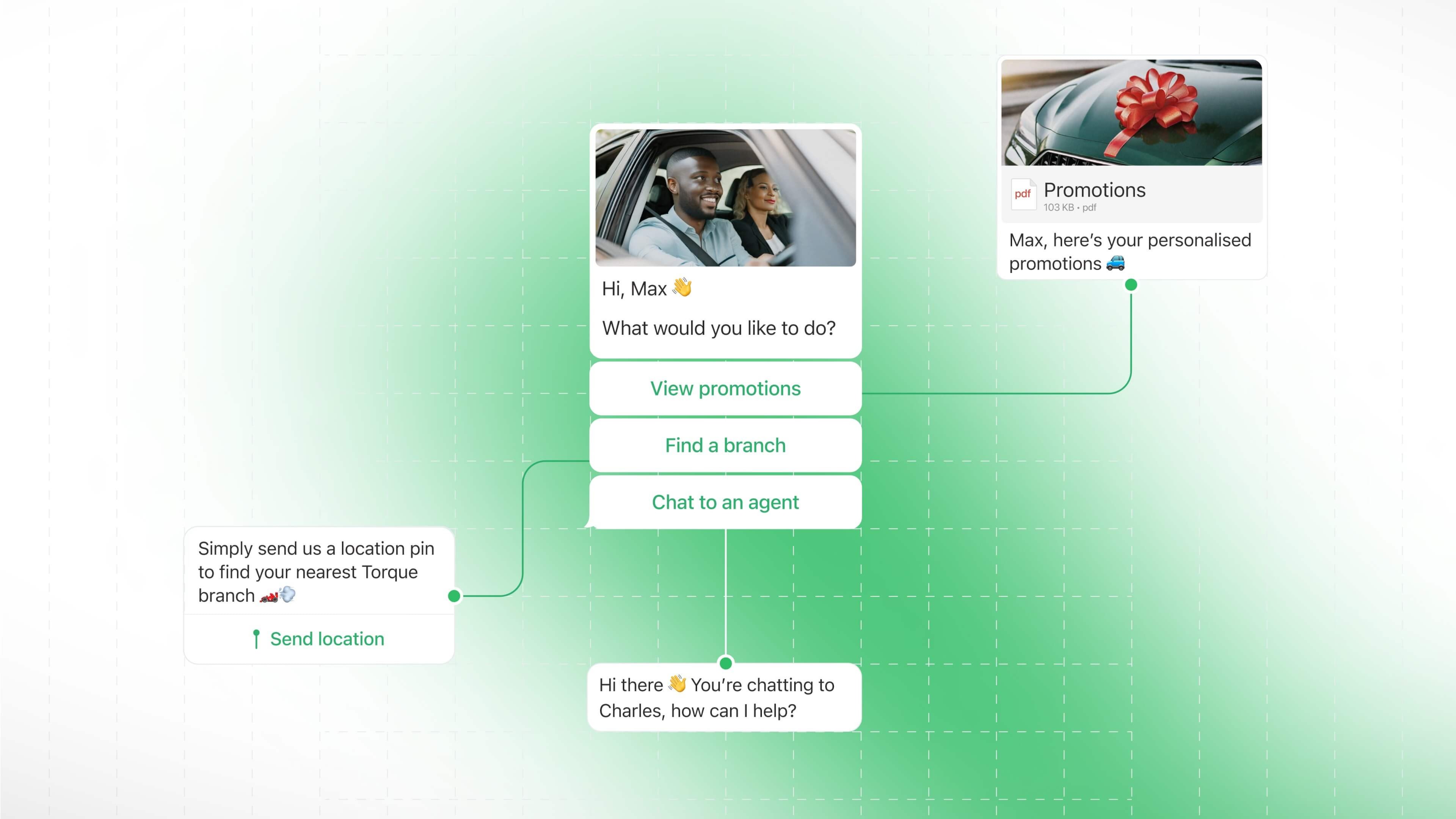
With Flows, you can automate the first steps of a conversation before it reaches your team.
Consent, marketing and recording are three separate questions
Is WhatsApp POPIA compliant for customer service? The channel isn’t compliant or non-compliant on its own. What matters is how you use it, and in financial services there are three distinct situations to think about. One opt-in doesn’t cover all of them.
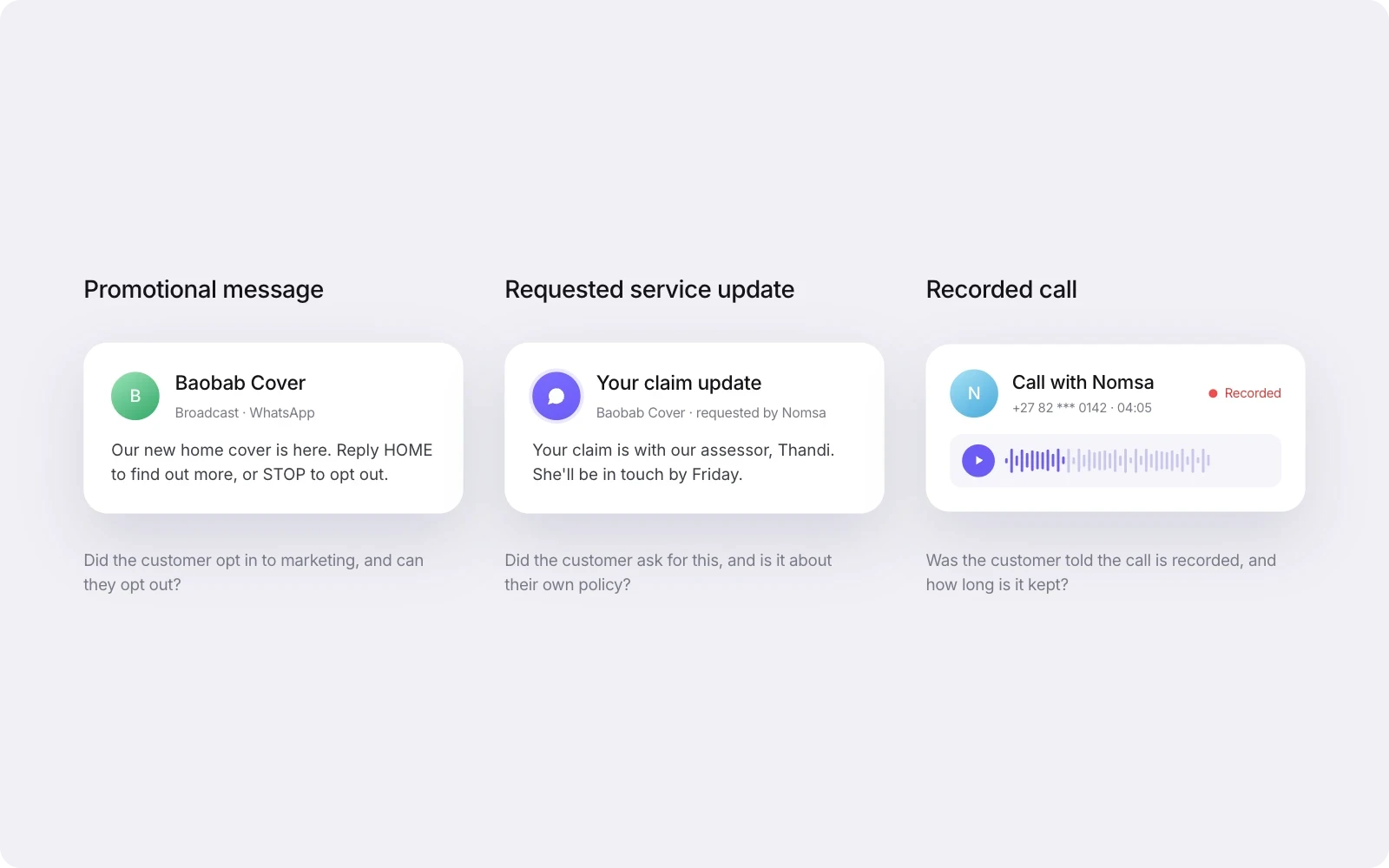
Situation | Example | The main question | Where to look |
|---|---|---|---|
Promotional message | A new funeral cover offer sent to existing customers | Do you have consent, or does the existing-customer exception apply? Does the message identify you and give a way to opt out? | POPIA section 69 and the Information Regulator’s direct marketing guidance |
Requested service update | A claim status update the customer asked for | Is the processing lawful and for a stated purpose? Has the customer been told? Is the information kept secure? | POPIA sections 11, 13, 14, 18 and 19 |
Recorded call | A call between a customer and a claims handler | Is the recording permitted, and how is it handled afterwards? | RICA section 4, alongside POPIA |
Promotional messages. POPIA section 69 restricts unsolicited electronic direct marketing. You need the person’s consent, or the existing-customer exception has to apply: you got their details during a sale, you’re marketing your own similar products, and they’ve had a chance to object, both when you collected their details and in every message since. You can only ask for consent once, and only if they haven’t already refused it. Every marketing message must say who it’s from and how to stop it.
Requested service updates. A claim update the customer asked for isn’t promoting anything. It still involves personal information, so POPIA’s general conditions apply, including lawful processing, purpose, retention, notice and security. Keep these messages to the service point. A claim update with a cover offer tacked on blurs the line.
Recorded calls. Recording is its own question. RICA section 4(1) allows a party to a conversation to intercept it, but that doesn’t give a business unrestricted permission to keep, reuse or share recordings. How you record, what you tell customers and how you handle the recording afterwards need to be assessed together.
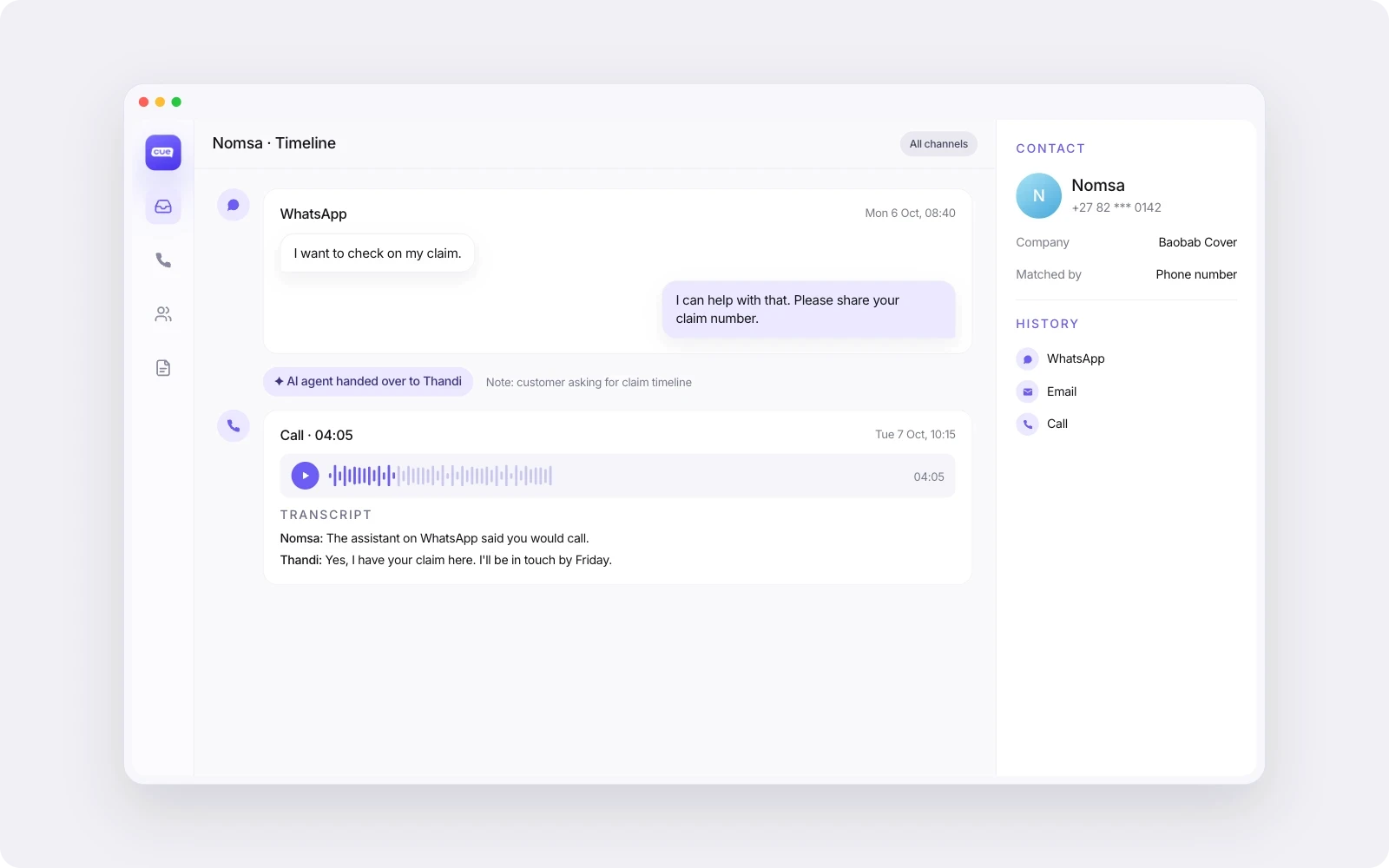
In Cue, every conversation is saved under the contact: WhatsApp messages, call recordings and transcripts, in one history. That gives you a single place to see what was said. It doesn’t decide your compliance position for you.
This is a principle-level guide, not legal advice. Have your legal or compliance team review your actual workflows against POPIA, RICA and the sector rules that apply to you.
Handling complaints on WhatsApp with TCF in mind
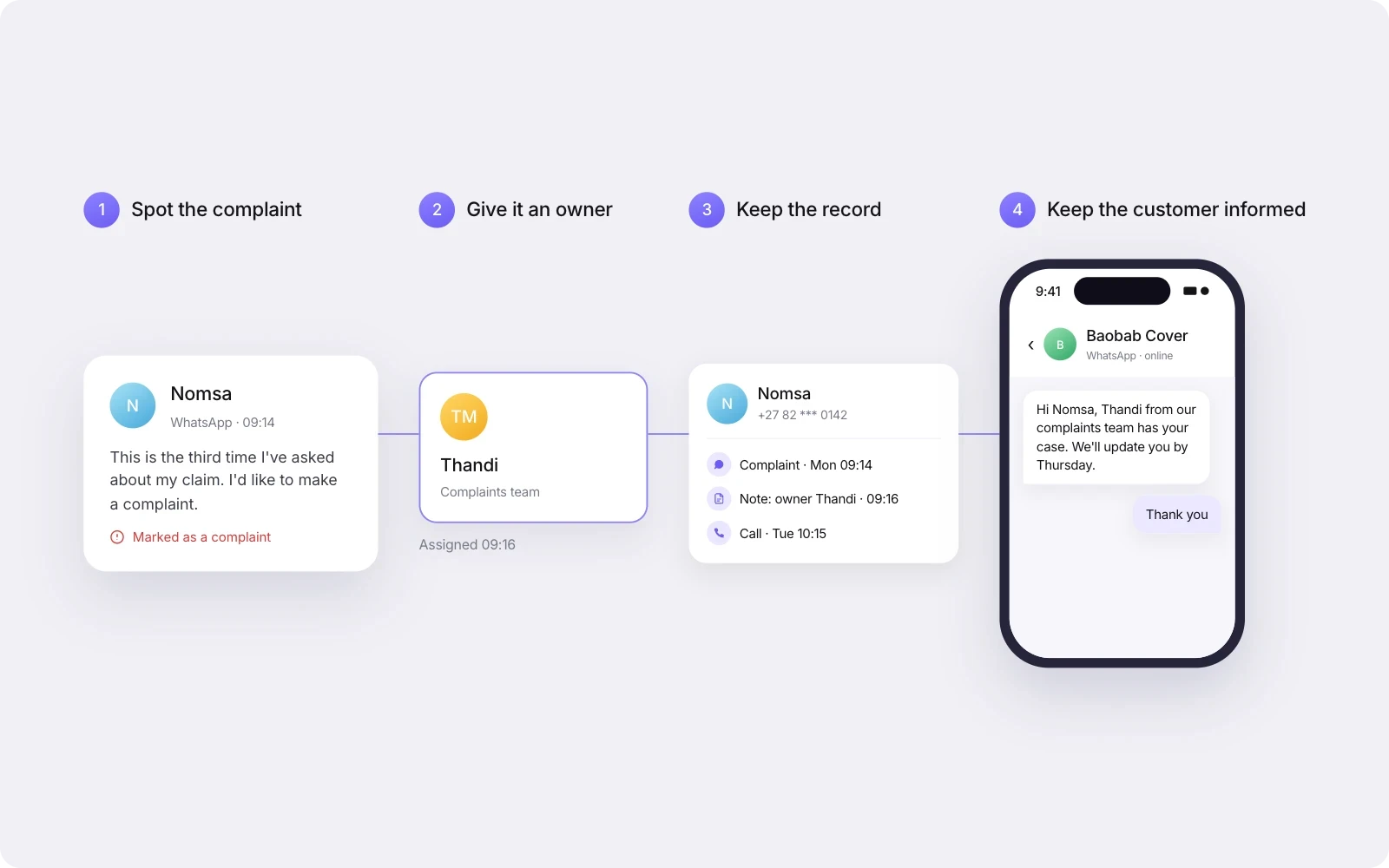
Handle complaints on WhatsApp by making them easy to raise, giving each one a named owner, keeping the record and keeping the customer informed until it’s closed.
The FSCA oversees market conduct and the fair treatment of financial customers. The Banking Association South Africa’s summary of Treating Customers Fairly sets out the outcomes. Three of them translate directly into how you run a WhatsApp channel:
TCF outcome | What it looks like on WhatsApp |
|---|---|
Customers get clear information throughout the product lifecycle | Answers come from approved content. Customers are told when something changes, not only when they ask. |
Service meets the expectations customers were given | Each conversation has a named owner, and the next step you promise is one you can deliver. |
No unreasonable barriers to complaints or claims | A customer can complain in the chat they’re already in. Nobody tells them to phone a different number or fill in a form somewhere else to “make it official”. |
Spot the complaint. Agents need to recognise one when it isn’t labelled, and know how to log it.
Give it an owner. A complaint sitting in a shared queue is everyone’s job and nobody’s. Assign it to a person or a team, and make that visible.
Keep the record. The conversation, any call and the outcome should all sit in one place, so whoever picks it up next sees the full picture.
Keep the customer informed. A short update between steps stops a second complaint about the first one.
How quickly you have to respond depends on your institution, your products and the rules you fall under, so build your own timeframes into the workflow rather than relying on a general figure.
Where AI helps, and where a person takes over
AI fits well on the routine questions: how a fee is calculated, what documents a claim needs, how to update an address. It stops where the question needs a customer’s own account, a decision or a judgement call.
Cue’s AI Agents are knowledge-based. They answer from the content you approve, and they hand the conversation to a person when a question goes beyond that. They don’t look up accounts or take actions on them. For a financial services business, that boundary is useful. The AI can’t quote the wrong balance, because it doesn’t look one up.
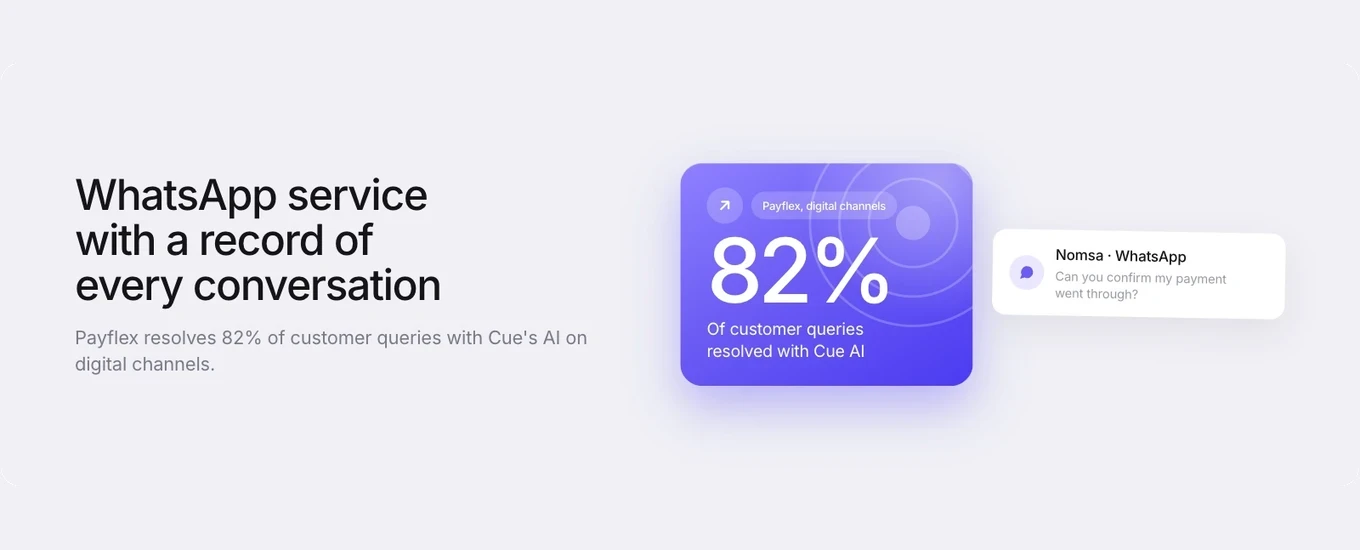
South African financial services business Payflex uses Cue this way. 82% of Payflex’s queries are resolved without a person joining, across its digital channels.
Hand over to a person when:
the customer asks about their own account, application or claim
the message reads as a complaint
the customer seems confused, distressed or vulnerable
the customer asks for a person
Some customers would rather talk. Cue Phone puts calls in the same inbox as WhatsApp, matches callers to their contact record by phone number, and lets agents call customers back from that record. Out of hours, you can set a message that points callers to WhatsApp, a channel your team answers.
What to look for in a WhatsApp platform for financial services
The best WhatsApp platform for a South African insurer, bank or lender is the one that fits how your service team works. Check for:
Local support. Someone in your time zone who knows the SA market. Cue has a Cape Town office and South African support.
A shared inbox. Several agents working the same WhatsApp number, with clear assignment.
Routing. Claims to the claims team, complaints to whoever owns complaints.
A full conversation history. What was said, by whom, and what happened next.
AI with a clear handover. Answers from approved content, and a person when it matters.
Calls in the same place. Call recordings and transcripts on the contact record, next to the WhatsApp messages.
For a wider checklist, see our guide to choosing a customer service platform in South Africa. If you’re still working out how calls fit with your existing phone system, read PABX vs a customer service phone system.
See it with your own queries
If you run service for a bank, lender or insurer in South Africa, the quickest way to judge a platform is to walk through your own claims, applications and complaints in it. We’ll show you how WhatsApp, Phone and AI Agents work together in Cue, with the records your compliance team will want to see.
Book a demo, or see how WhatsApp Business works in Cue.