

Put five customer service platforms side by side and the feature lists look almost identical. Shared inbox, WhatsApp, live chat, email, automation, reporting. The differences that matter for a South African business sit lower down the page, or aren’t on it at all.
When you’re choosing a customer service platform in South Africa, check five things the feature grid won’t tell you: who supports you and where they are, whether you pay in rand, how the platform helps you meet POPIA, how deep its WhatsApp goes, and whether phone calls sit in the same place as your messages. This guide works through each one and ends with a scorecard you can use on vendor calls.
Start with how your customers contact you
The right platform is the one built around the channels your customers already use, not the longest list of channels you might switch on one day.
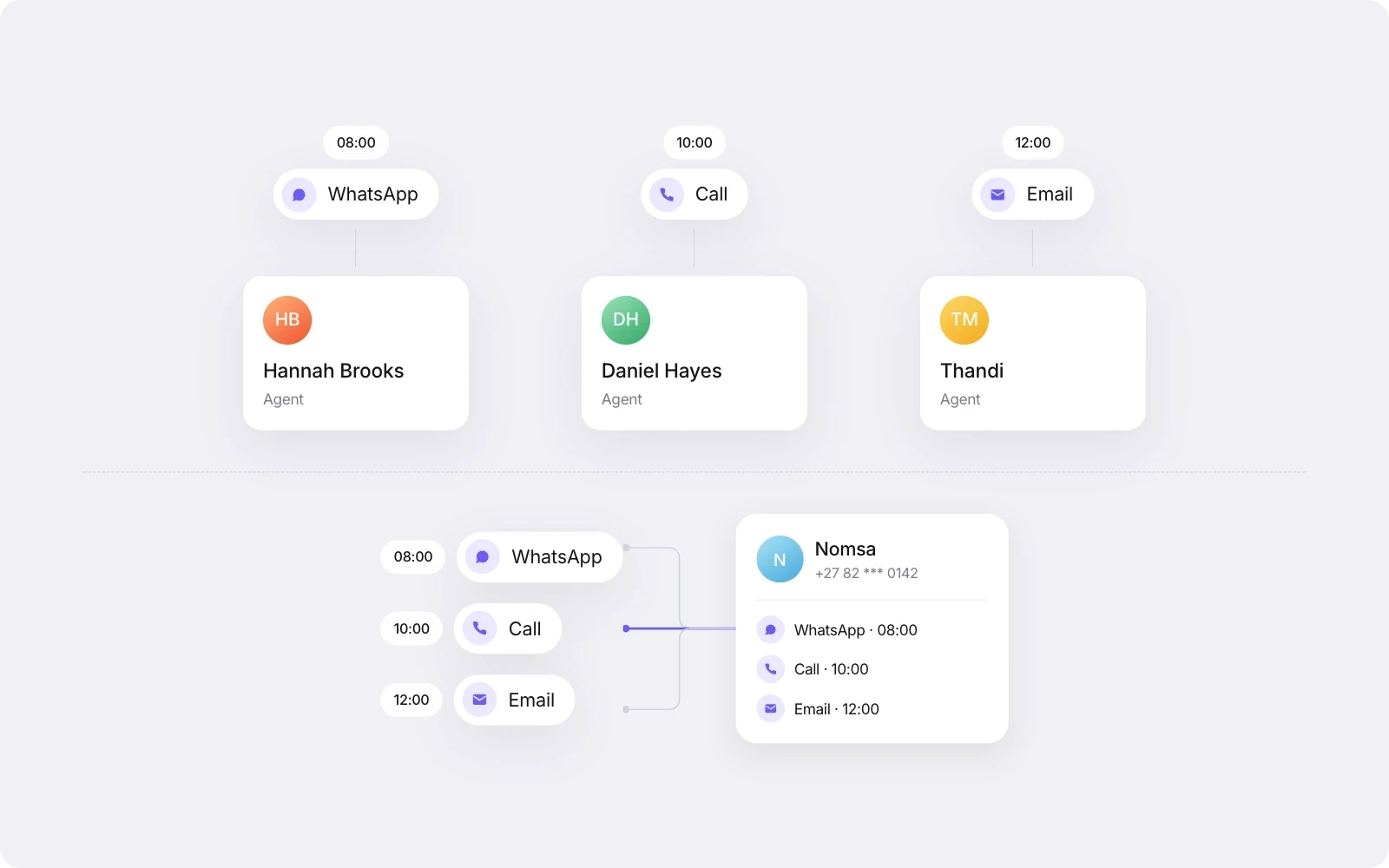
Before you look at any vendor, pull a month of enquiries and sort them by where they arrived. That might be WhatsApp, phone, email and a website chat widget, in some mix. Then ask three questions of each channel:
Who answers it today, and from which device?
Where does the conversation end up once it’s done?
What happens when a customer starts on one channel and follows up on another?
The third question is the one to watch. A customer sends a WhatsApp at 08:00, phones at 10:00 because nobody replied, then emails at noon. If those three contacts land with three different people, your team spends the afternoon working out what’s already been said.
Write the answers down. They become your requirements, and they give you something concrete to test in every demo.
Local presence and who you actually speak to
A provider with a local presence has people in South Africa who understand your market, your time zone and your customers. Offshore support can work well, but you should know which you’re buying before you sign.
Ask each vendor plainly: when something breaks, who do I speak to, and where are they based? Ask who runs your onboarding, too. Setting up WhatsApp numbers, message templates, routing and team permissions is where a lot of the early work sits, and it goes faster with someone who has done it for businesses like yours.
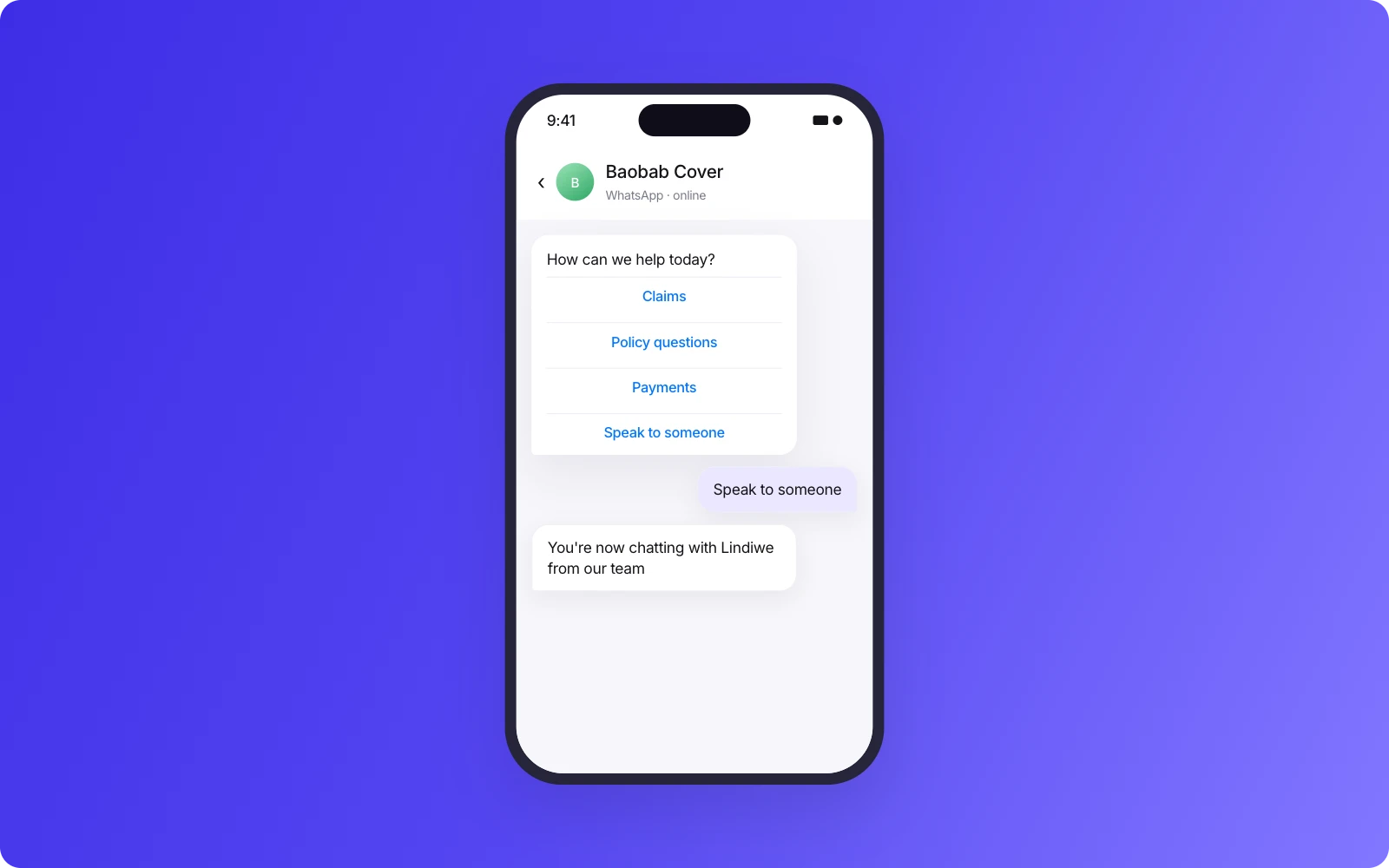
Cue was founded in 2015 and has a registered office in Cape Town. South African customers are supported by Cue’s team in Cape Town, so the people helping you set up and the people you call later understand how South African customers use WhatsApp and phone.
Local proof is worth asking for as well. A vendor should be able to name South African customers in your sector and show what changed for them. Richfield, a South African higher education provider, is one Cue example: Richfield’s response rates increased sevenfold after it switched prospect engagement from calling to WhatsApp. You can read the Richfield story.
WhatsApp, chat, email and calls in one place
A connected customer service platform puts WhatsApp, web chat, email and phone calls into one shared inbox, with every conversation saved against the customer’s contact record. Agents see the full history before they reply, whichever channel the customer used.
How deep the WhatsApp goes
Plenty of tools “support WhatsApp”. Fewer are built around it. When you test a platform, look for:
a shared team inbox on the WhatsApp Business Platform, so customers message one business number and any agent can pick up
routing that sends conversations to the right team without someone triaging by hand
chatbots and automation for the questions you answer fifty times a day, with a clear handover to a person
broadcasts for service updates, with opt-outs handled properly
Cue’s WhatsApp Business channel covers this. Payflex, a South African financial services business, resolves 82% of customer queries with Cue’s AI across its digital channels. The Payflex case study explains how they set it up.
Calls in the same place
If your phones run on a separate PABX, calls never appear next to the WhatsApp thread or the email chain. In that case, it’s worth reading our guide to PABX vs a customer service phone system before you decide.
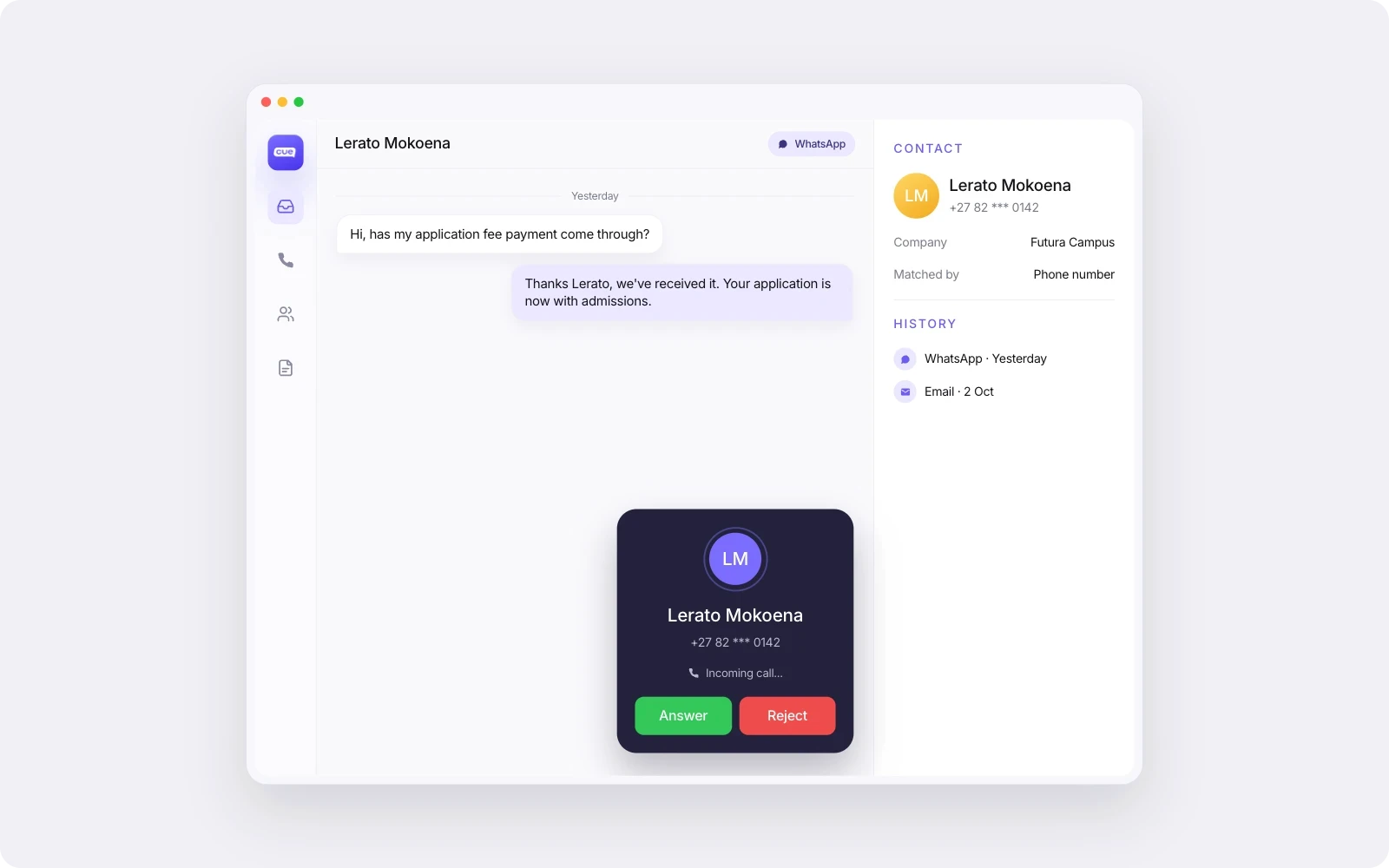
Cue Phone brings calls into the same inbox. Agents answer and make calls from Cue, callers are matched to their contact by phone number, and keypad menus route calls to the right team. Calls can be recorded and transcribed, and recordings and transcripts sit on the contact record alongside WhatsApp, email and chat history.
In South Africa you can bring across a landline number. Mobile numbers can’t be ported yet, but you can get a new South African mobile or local number through Cue.
If you’re comparing WhatsApp-first tools specifically, our Respond.io vs Cue comparison and our comparison of WhatsApp Business solution providers in South Africa go into more detail.
POPIA and your customer data
POPIA, the Protection of Personal Information Act, applies to the customer information your service team handles every day: names, numbers, message content and call recordings. A platform can’t make you compliant on its own, but it can make your obligations easier or harder to meet.
The parts of the Act most relevant to customer service software are:
Lawful processing and purpose (sections 11 and 13). You need a lawful basis for processing personal information and a specific purpose for collecting it.
Retention (section 14). Records shouldn’t be kept longer than you need them for that purpose.
Notice (section 18). Customers need to know what you’re collecting and why.
Security (section 19). You must take reasonable steps to protect the information.
Direct marketing (section 69). Unsolicited electronic marketing needs consent, or must fall within the existing-customer exception, and every message must give a way to opt out. The Information Regulator’s guidance on direct marketing explains how consent and objections should work.
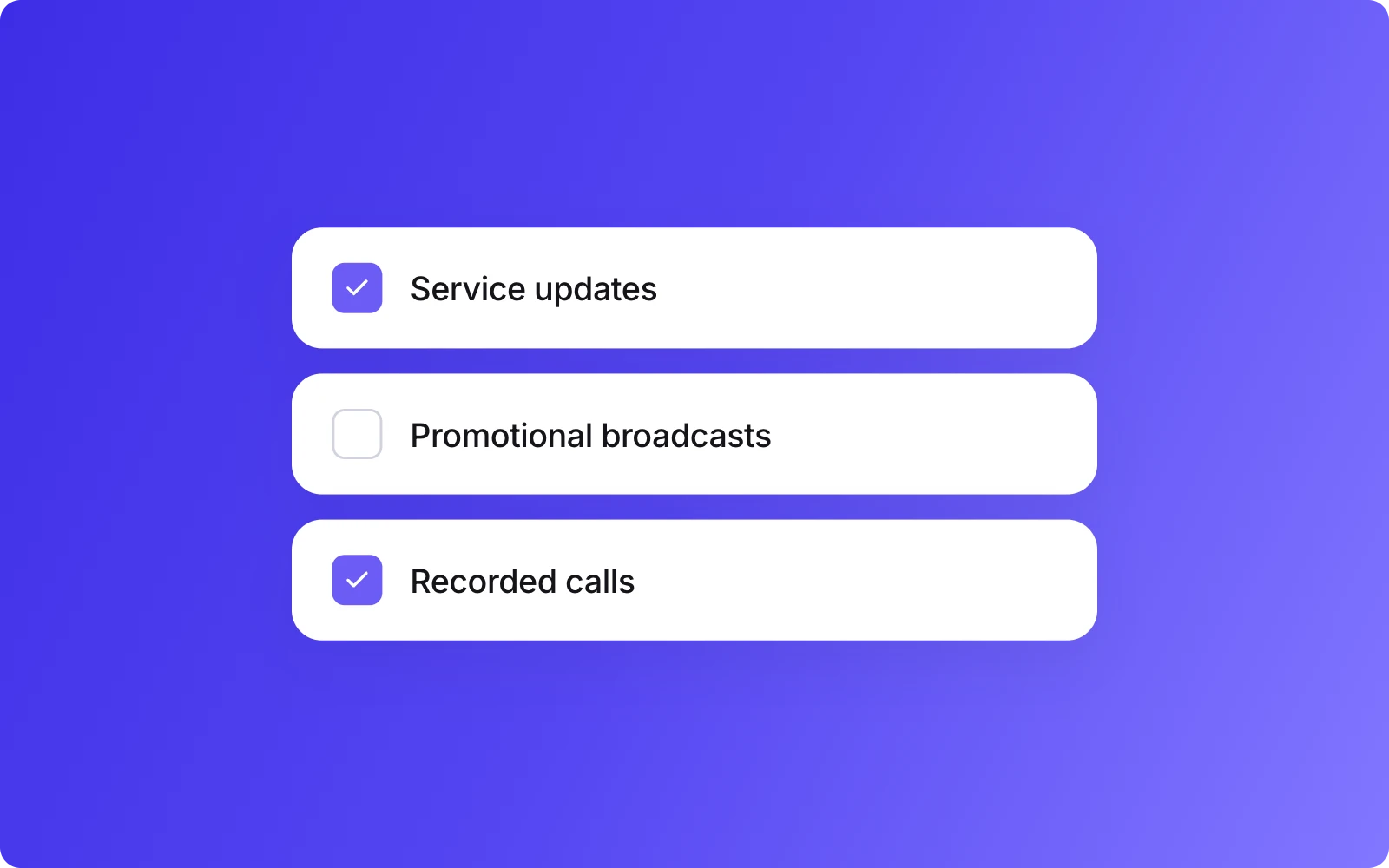
Service updates a customer asked for, promotional broadcasts and recorded calls are different things. One opt-in doesn’t cover all three, so keep them separate in how you collect consent.
Questions worth putting to every vendor:
How do you record marketing consent and opt-outs on the contact?
Who on my team can see conversations and recordings, and how is that controlled?
How do I delete a customer’s records if I need to?
Where is my data stored?
Ask for the answers in writing, and run your final setup past whoever handles legal and compliance for your business. If you work in a regulated sector, our guide to WhatsApp customer service in South African financial services covers recording and record-keeping in more depth.
Pricing in rand
Pricing in rand means your monthly cost doesn’t move with the exchange rate. For a South African business budgeting a year ahead, that matters as much as the headline price.
Platforms price in a few ways. Some charge per agent seat, so cost rises as your team grows. Others charge by conversation volume or contact count, or combine a platform fee with usage. Ask which model applies, and model your cost at today’s team size and at the size you expect in two years.
Then ask about WhatsApp separately. Meta charges for certain WhatsApp messages on top of what the platform charges you. Check whether the vendor passes those charges through at cost, adds a margin or bundles them, and how they appear on your invoice. Ask the same about call minutes if you’re adding phone.
You can see Cue’s pricing in rand on our website.
Measuring service after you go live
There’s no reliable, current national customer service benchmark for South Africa that you can compare yourself against. So set your own measures before launch, record a baseline in the first month, and track movement from there.
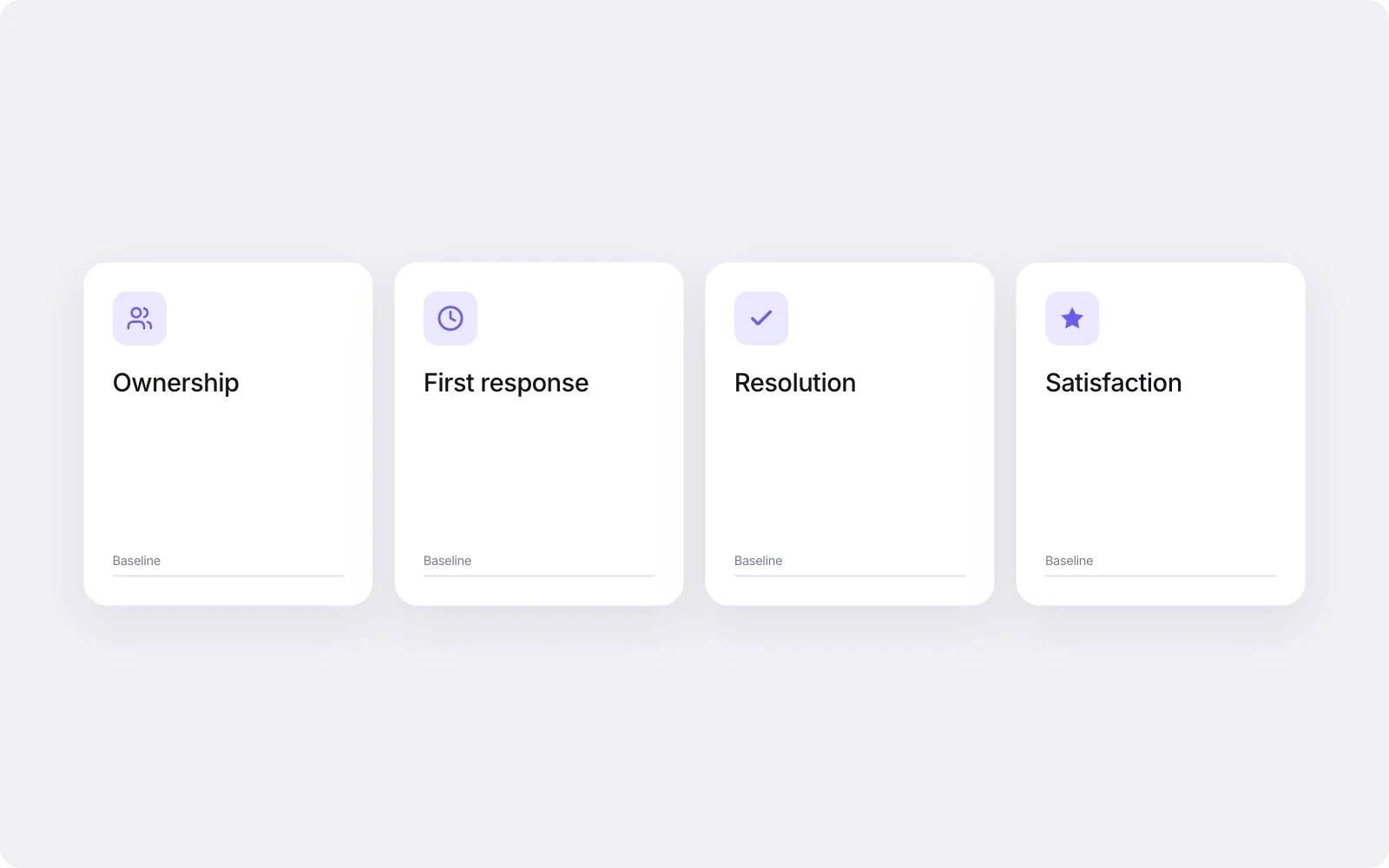
Four are worth defining internally:
Ownership. Every conversation has a named person or team responsible for it. Track how many sit unassigned and for how long.
First response. Time from a customer’s first message or call to a reply from your team. Measure it separately for business hours and after hours.
Resolution. Whether the customer’s issue was actually sorted, and how long that took. Decide what “resolved” means for your team and write it down.
Satisfaction. A short survey after the conversation closes. Keep the question the same so the numbers stay comparable over time.
Agree the definitions with your team leads before you switch anything on. A new platform changes how work is recorded, and if you change the definitions at the same time, you won’t know whether service improved or the measurement did.
A scorecard for vendor calls
Use this on every vendor call. Score each row from 1 to 5 and keep notes on what you were shown, not what you were told.
What to check | Questions to ask | Score (1 to 5) |
|---|---|---|
Channels you use today | Does it cover WhatsApp, web chat, email and phone in one inbox, with one contact history? | |
WhatsApp depth | Shared number, routing, chatbot handover to a person, broadcasts with opt-outs? | |
Calls | Can agents answer and make calls from the same inbox? Can you keep your existing number? | |
Local support | Who supports you, where are they based, and who runs onboarding? | |
Local proof | Can they name South African customers in your sector, with results? | |
POPIA | How are consent, access controls, deletion and data storage handled? Answers in writing? | |
Pricing | Billed in rand? Seat or usage based? How are Meta charges and call minutes billed? | |
Integrations | Does it connect to the systems you already run? Ask to see it working, not a logo. | |
Measurement | Can you track ownership, first response, resolution and satisfaction the way you define them? |
The highest total isn’t always the answer. If a vendor scores 1 on a row that’s critical for you, that row should decide it.
See how Cue fits your team
If WhatsApp is already where your customers are and calls are still sitting somewhere else, we’d be glad to show you how Cue handles both, with your channels and your enquiry types. Our team in Cape Town will walk you through it.