Application and funding windows in South Africa open and close on different dates, and student enquiries spike around each one. The way to cope is to plan by milestone, not for a loose “application season”. Split admissions, funding, document, offer and registration questions apart, and give each type an owner, one source of truth and a clear route for escalation.
If you answer students on WhatsApp, that’s where the pressure lands. This guide uses the 2027 cycle as a worked example so you can get ready for the next one.
Why application season breaks the enquiry inbox
Application season breaks an enquiry inbox because questions arrive in short, sharp bursts, and many of them need an answer from a team other than the one reading the message.
The 2027 cycle shows how quickly demand builds. NSFAS received 51,474 applications in the first four days of its 2027 application window, according to its statement of 22 September 2026. That figure counts applications, not enquiries. But every one of those applicants who was unsure about a document, a deadline or their status was a possible question for somebody’s team.
Volume is only part of it. A student asks, “Has my application gone through?” The person reading it works in admissions and can’t see funding status. The message waits. The student asks again by email, then phones. Now several people are working on one question, and nobody owns it.
This is the point where some staff start answering from their own phones, just to keep up.
Plan by calendar, not by “season”
Build your enquiry plan around the dates that actually drive questions at your institution. Different schemes and institutions run different windows, so a single “applications are open” message will be wrong for some of your students.
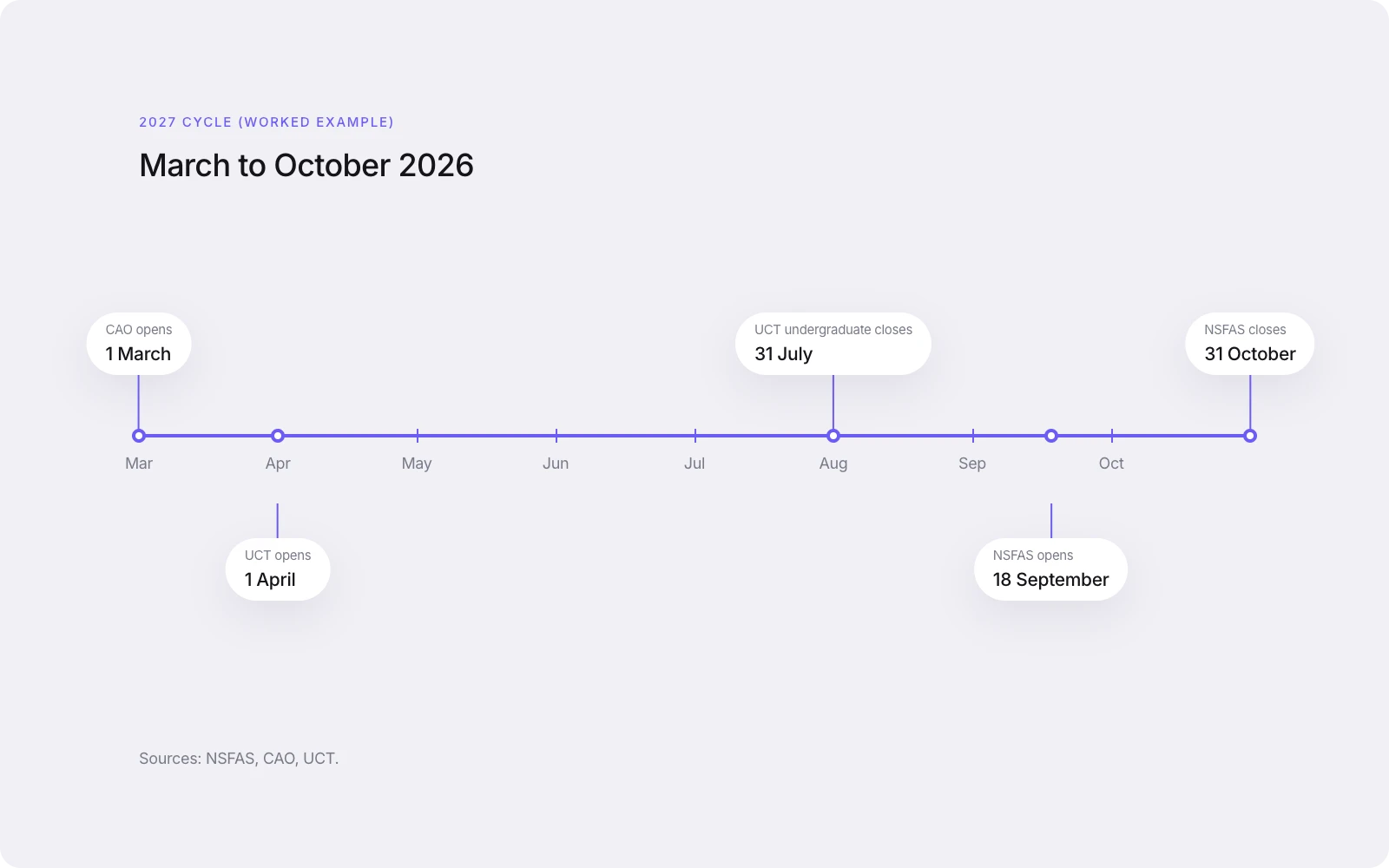
Here’s how the 2027 cycle looked across three sources:
Milestone (2027 cycle) | Date | Applies to |
|---|---|---|
CAO applications opened | 1 March 2026 | CAO process. Closing dates varied by institution and programme |
UCT applications opened | 1 April 2026 | UCT only |
UCT undergraduate applications closed | 31 July 2026 | UCT only |
NSFAS applications opened | 18 September 2026 | National student funding |
NSFAS applications close | 31 October 2026, 23:59 SAST | National student funding |
Sources: NSFAS how to apply, CAO applications for 2027 entry, UCT application procedure.
Look at the order. By the time the NSFAS window opened, UCT’s undergraduate deadline had already passed. A UCT applicant in September was asking funding questions, not admissions questions. A student applying through the CAO might have been asking both.
So start with your own dates: your institution’s opening and closing dates, the funding schemes your students rely on, offer dates and registration. Check them again at the start of every cycle, because they change.
Separate the five enquiry types
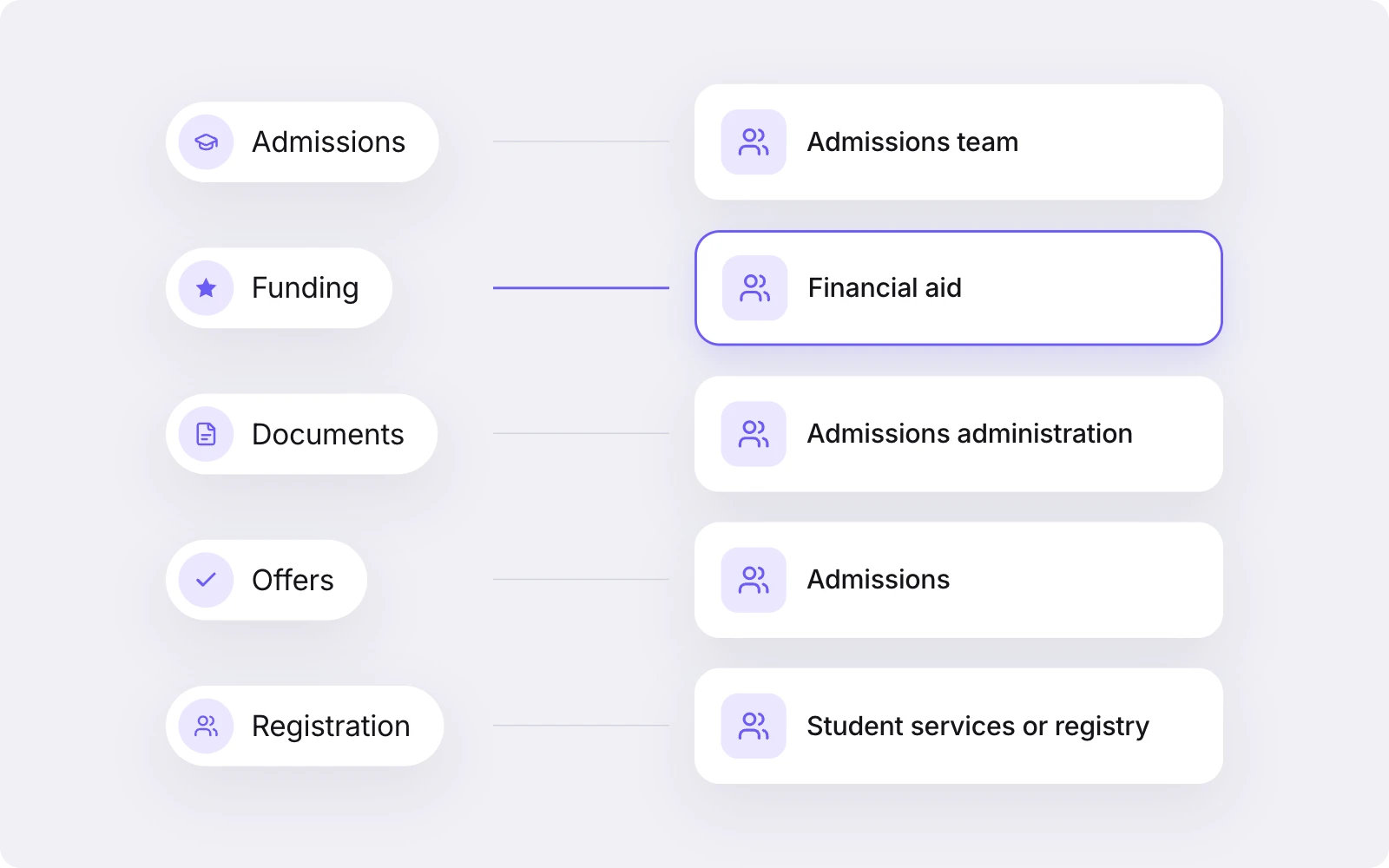
Admissions, funding, documents, offers and registration questions each need a different answer from a different person. Treat them as five separate queues, even if they all arrive on one WhatsApp number.
Enquiry type | Example question | Source of truth | Owner | Escalate when |
|---|---|---|---|---|
Admissions | “Do I meet the entry requirements for this programme?” | Published admission requirements | Admissions team | The student doesn’t qualify and needs another programme suggested |
Funding | “Has my funding been approved?” | The funding scheme’s own portal, or your financial aid office | Financial aid | Funding status is blocking an offer or registration |
Documents | “What’s still missing from my application?” | Your application system | Admissions administration | A document has been rejected more than once, or a deadline is close |
Offers | “Have I been accepted, and how do I accept?” | Your application system and offer letter | Admissions | The offer is conditional or the student disputes it |
Registration | “When and how do I register?” | Registration calendar | Student services or registry | Registration is blocked by fees, funding or documents |
The source of truth column matters most. If two teams answer the same funding question from two different places, students get two different answers.
Be careful with documents. Use WhatsApp to tell students what’s missing and where to submit it. Documents themselves should go through your official application or funding portal, not the chat. POPIA expects personal information to be processed for a defined purpose and kept secure, so decide up front what your WhatsApp channel is for and write your templates to match. The Protection of Personal Information Act sets out those conditions. Your own compliance team should sign off the final wording.
Qualify before it reaches an adviser
Ask a few structured questions at the start of each conversation. That way, every enquiry reaches the right team with context, and routine questions get answered without an adviser touching them.
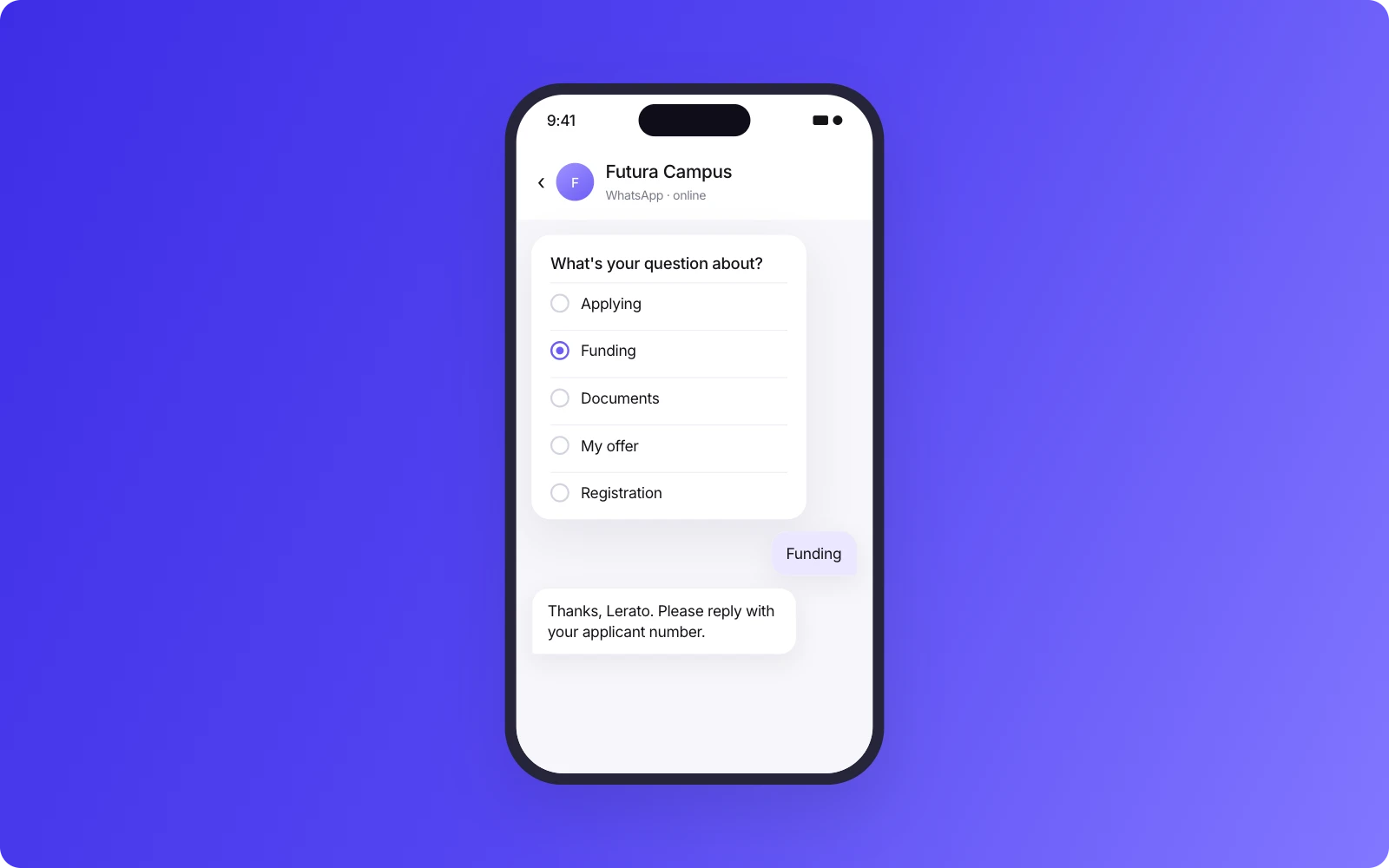
Three or four questions are enough:
What’s your question about: applying, funding, documents, an offer or registration?
Which programme or campus?
Have you already applied? If so, what’s your applicant or student number?
In Cue, Flows can ask these questions inside the WhatsApp conversation and send the enquiry to the right team based on the answers. Cue’s AI agents can answer common questions from content your team has approved, such as entry requirements, closing dates and where to submit documents.
Keep the line clear between general and personal. “When does registration close?” can be answered from approved content. “Why hasn’t my funding come through?” needs a person who can see that student’s record.
We cover the admissions side of this in more depth in our guide to WhatsApp automation for educational admissions.
Keep staff off personal phones
Admissions staff end up on personal phones when the official channel can’t keep up in peak weeks. The fix is to give the whole team access to the institution’s own WhatsApp number, so conversations stay with the institution rather than with whoever happened to reply.
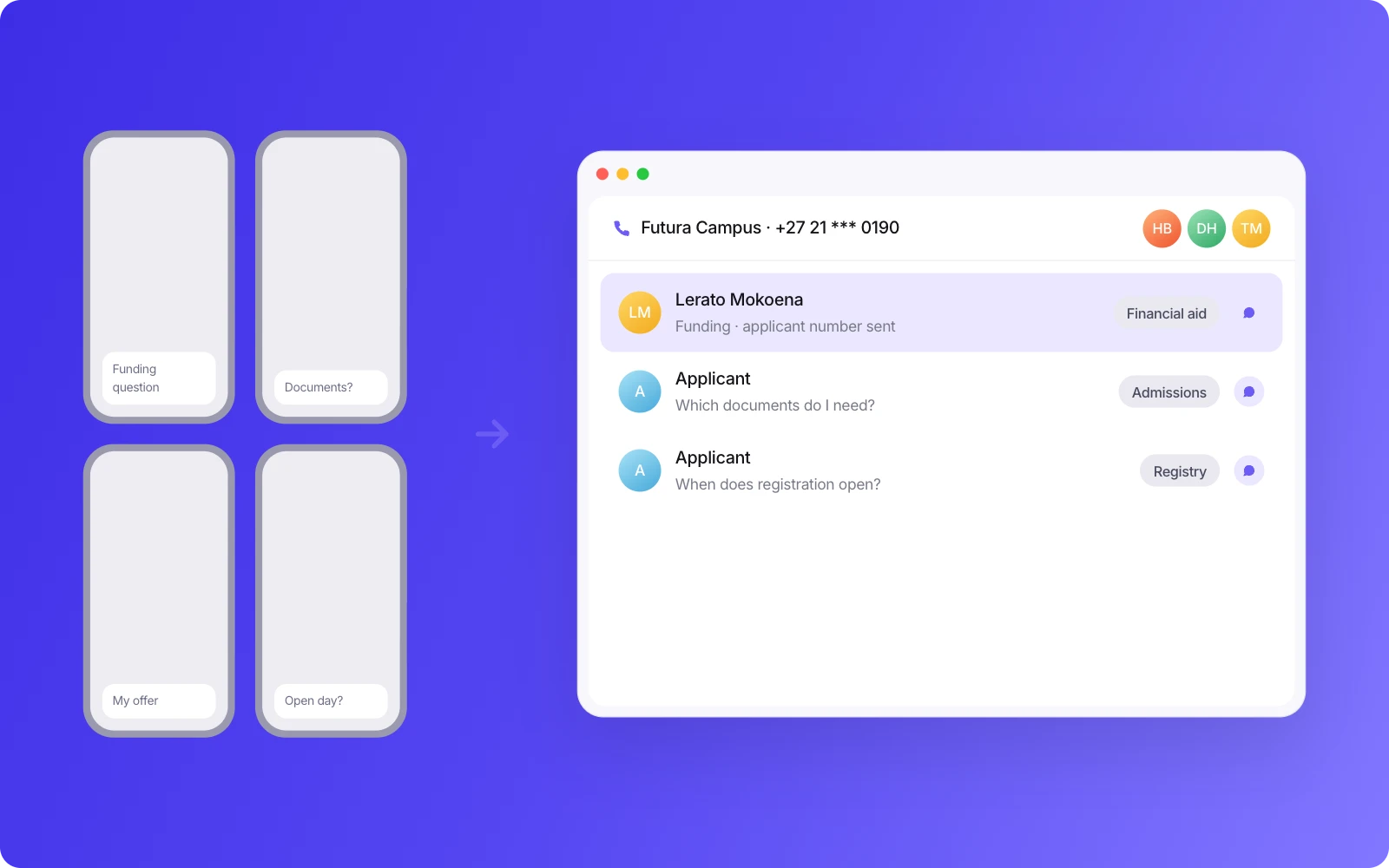
That matters most when someone leaves or goes on leave mid-cycle. In Cue, every conversation is saved under the student’s contact record, so the next person can pick up where the last one stopped. If your team also takes calls in Cue, call recordings and transcripts sit on the same record as the WhatsApp history. It also gives managers a view of what’s being said to applicants, which is hard to get when messages are spread across a dozen personal phones.
An admissions enquiry calendar and response library
An admissions enquiry calendar and response library is a single document that lists every milestone students will ask about, the approved answer, and who owns it. Build it before the cycle opens and review it whenever a date changes.
Milestone | Date this cycle | Authoritative source | Date last checked | Owner | Approved answer | Escalation route |
|---|---|---|---|---|---|---|
Example: NSFAS applications close | 31 October 2026, 23:59 SAST (2027 cycle) | NSFAS how to apply page | [date] | Financial aid | [your approved wording] | Financial aid manager |
Your applications open | Admissions | |||||
Your applications close | Admissions | |||||
Missing-document deadline | Admissions administration | |||||
Offers sent | Admissions | |||||
Registration opens and closes | Student services |
The “date last checked” column is the one teams skip. Don’t. An answer that was right in March can be wrong by September, and the template keeps sending it.
Once the library is agreed, the same wording can feed your WhatsApp templates and the content your AI agent answers from.
What Richfield found
Richfield’s response rates increased sevenfold after it switched prospect engagement from calling to WhatsApp. You can read how they did it in the Richfield case study.
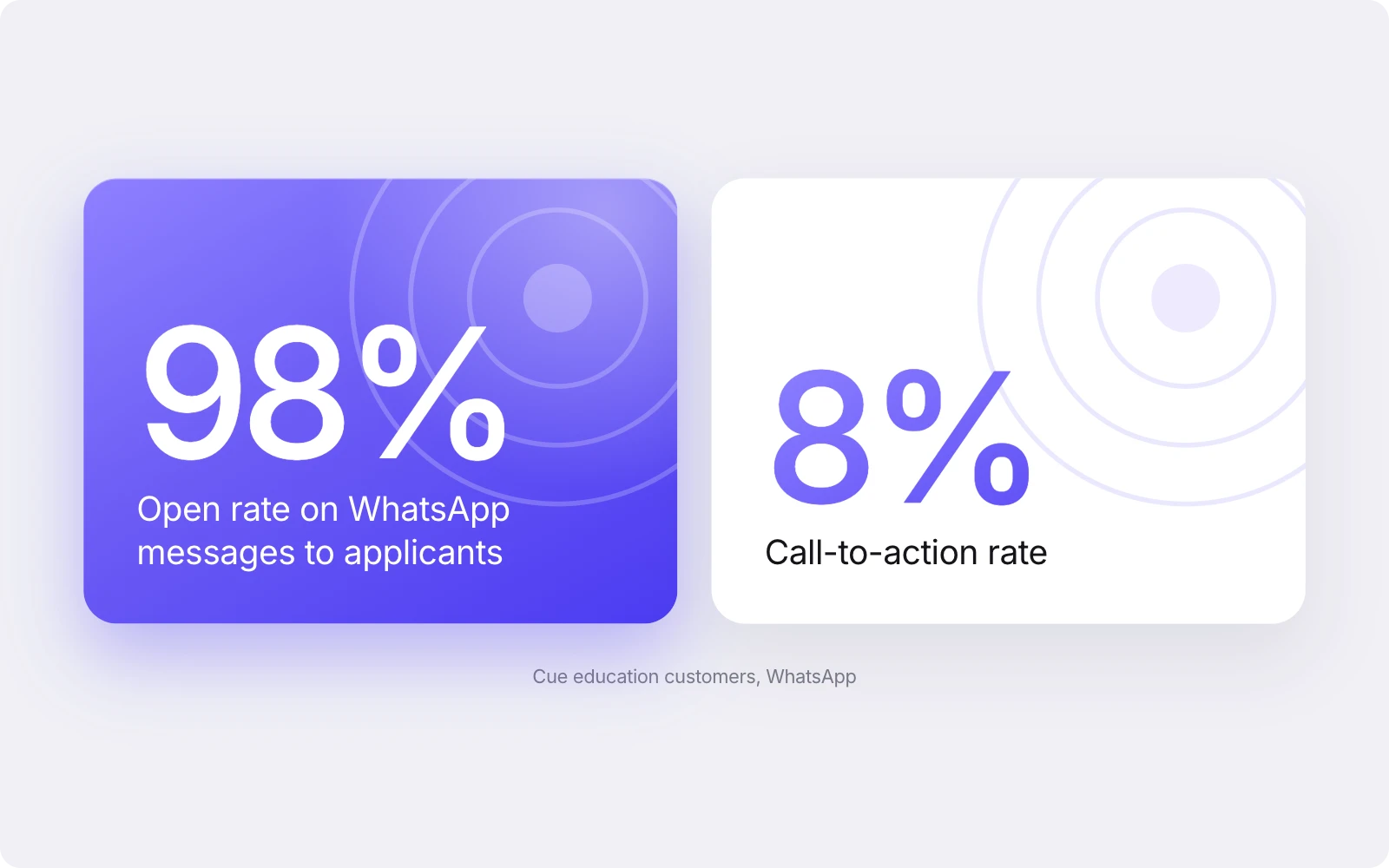
Across Cue’s education customers, WhatsApp messages to applicants see a 98% open rate and an 8% call-to-action rate. These figures come from Cue’s own education customer experience, not an industry benchmark, and both relate to WhatsApp.
The point for application season: Richfield’s experience suggests students are more likely to respond on WhatsApp than to a call. That only helps if the replies land somewhere organised.
Get ready for the next cycle
Once the 2027 windows close, the next ones will open on their own dates, and your enquiry plan should be ready before they do. Start with the calendar, agree the five queues and their owners, then build the response library.
For more on how colleges and universities use Cue across enquiries, admissions and student support, see Cue for education, or read our broader guide to WhatsApp for education. If you’re comparing platforms, our guide to choosing a customer service platform in South Africa covers what to check.
When you’re ready to see it working, book a demo.